
Why 500 Followers Is Your Superpower (Not a Weakness)
When you have a smaller audience, you possess unique advantages that mega-influencers often lose: intimacy, direct feedback, and extreme niche focus. These aren't limitations; they are your superpowers for monetization.
Direct Engagement and Trust
With 500 followers, you likely know many of them by name, or at least recognize their handles. You can respond to every comment, answer every DM, and build genuine relationships. This level of personal connection fosters deep trust and loyalty, which is invaluable when it comes to selling. Your followers aren't just numbers; they're a community invested in what you share. This trust means they are far more likely to purchase a product or service you recommend because they believe in your authenticity and expertise.
Hyper-Niche Focus
A smaller audience naturally means you've likely attracted people around a very specific interest or problem. This allows you to hone in on their exact needs with laser precision. Instead of creating content for a broad, generic audience, you can tailor your offerings to solve a very specific pain point for a very specific group. This focus dramatically increases the perceived value and relevance of anything you create or sell. For example, if your 500 followers are all aspiring digital artists struggling with composition, you know exactly what kind of product they need.
Agility and Feedback Loops
Big creators move slowly. Testing new product ideas, gathering feedback, and pivoting strategies can be a logistical nightmare with millions of followers. With 500, you can run quick polls, send out surveys, or even have direct conversations to validate ideas and gather feedback in real-time. This agility allows you to iterate quickly, refine your offerings, and launch products that are almost guaranteed to resonate because they're built directly from your audience's input. This significantly de-risks your product development process.
The Best Strategy for Small Creators: Digital Products
For creators with 500 followers, the path to sustainable income is overwhelmingly through digital products. While other monetization methods exist, they often fall short for smaller audiences. Let's break down why digital products are your best bet:
- Ad Revenue: Requires millions of views to generate meaningful income. Your 500 followers won't cut it.
- Brand Sponsorships: Brands typically look for audiences in the tens or hundreds of thousands for paid campaigns, unless you have an extremely niche and high-spending audience.
- Physical Products: High upfront costs (inventory, manufacturing), complex logistics (shipping, returns), and lower profit margins. Too risky and demanding for a beginner.
- Services (Coaching, Consulting): Excellent for high-ticket income, but limited by your time. You can only serve so many clients, and scaling becomes impossible without raising prices dramatically or hiring.
- Affiliate Marketing: While possible, the conversion rates for small audiences often translate to very low payouts unless you're promoting high-commission items.
Digital products, on the other hand, offer:
- Zero Inventory, Zero Shipping: Once created, you can sell unlimited copies without managing physical stock or dealing with logistics.
- High-Profit Margins: After the initial creation cost (which can be very low, often just your time and software subscriptions), almost every sale is pure profit.
- Scalability: Sell to 5 people or 5,000 people; the effort required for each sale is virtually the same.
- Passive Income Potential: Once launched, your digital product can continue to generate sales while you sleep, travel, or work on new projects.
- Direct Value Delivery: You're solving a specific problem for your audience, building even more trust and authority.
This strategy allows you to leverage your expertise and audience trust to create valuable assets that can generate income around the clock, without the logistical headaches or massive audience requirements of other methods.
What Digital Products Can You Create (Even As a Beginner)?
The beauty of digital products is their versatility. You don't need to be a coding wizard or a graphic design guru. You just need to have knowledge or skills that can help someone else.
For Total Beginners (Leveraging Existing Skills)
If you're just starting and feel you don't have a "super skill," think about what problems you've solved for yourself or friends, or what processes you've streamlined.
- Templates:
- Canva Templates: For social media posts, resumes, presentations, planners, or invitations.
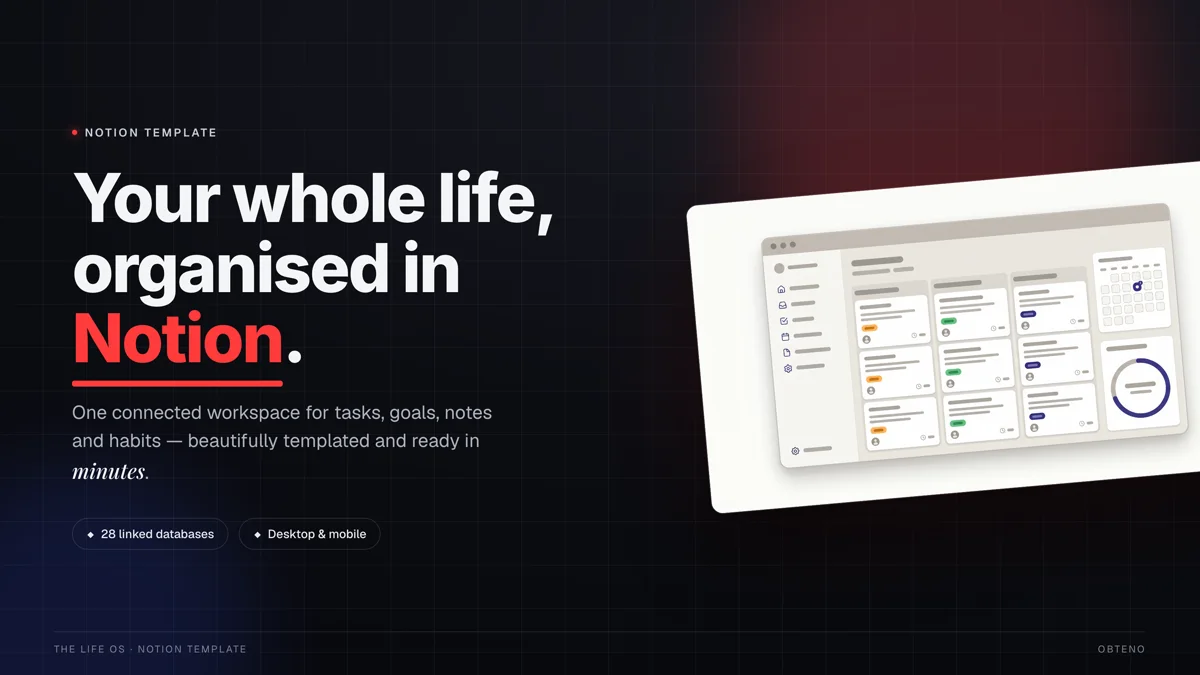
- Notion Templates: For productivity, content planning, habit tracking, project management, or personal finance.
- Spreadsheet Templates: Budget trackers, goal planners, client management sheets (Google Sheets, Excel).
- Email Templates: For job applications, outreach, or customer service.
- Guides & Checklists:
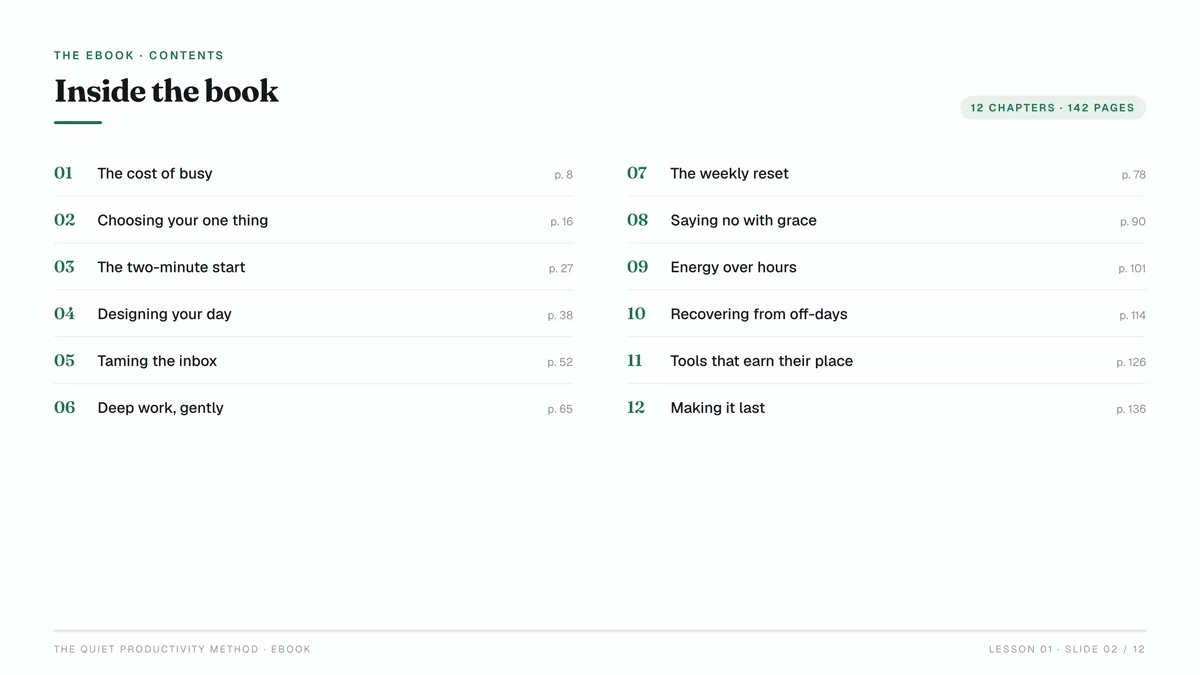
- E-books/Mini-Guides: Short, actionable guides (e.g., "5 Steps to Better Sleep," "Beginner's Guide to Starting a Podcast," "Healthy Meal Prep in 30 Minutes").
- Checklists: Packing lists, pre-flight checklists, project launch checklists.
- Printables:
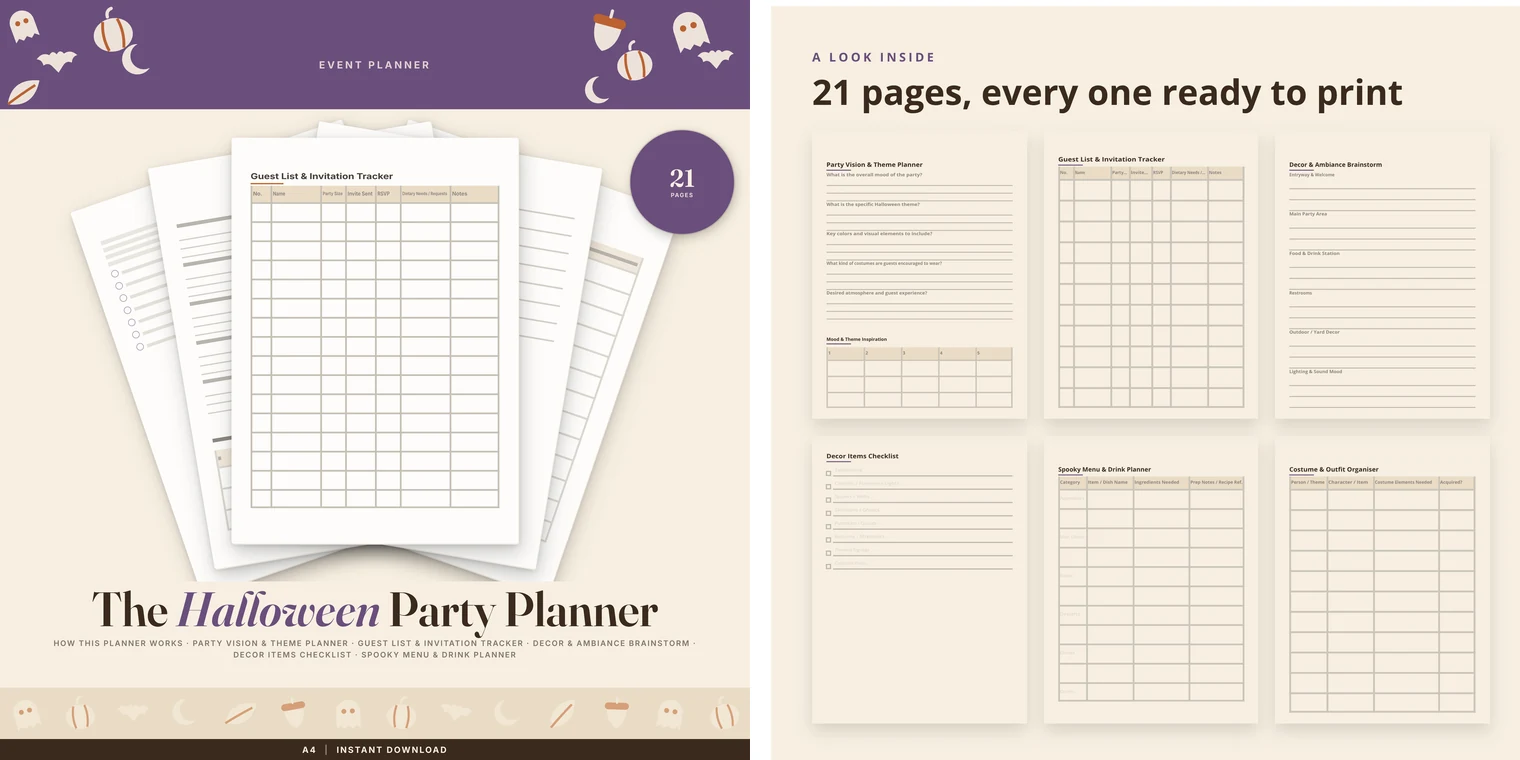
- Planners & Journals: Daily planners, habit trackers, gratitude journals.
- Worksheets: Educational worksheets, goal-setting worksheets.
- Digital Stickers/Art: For digital planners or personal use.
For Creators with Some Expertise (Turning Knowledge into Products)
If you have a specific skill, hobby, or professional background, you can package that knowledge into higher-value products.
- Mini-Courses/Workshops:
- Short video series or interactive guides teaching a specific skill (e.g., "Intro to Mobile Photography," "Basic Guitar Chords," "Mastering Your First Fermentation").
- Presets & Filters:
- Lightroom Presets: For photographers or social media users looking for a consistent aesthetic.
- Video LUTs: For videographers.
- Digital Art & Mockups:
- Custom brushes for Procreate/Photoshop, digital patterns, mockups for designers.
- Resource Libraries:
- Curated lists of tools, articles, or prompts related to your niche.
Here’s a quick overview of common digital product types and their considerations:
| Product Type | Pros | Cons | Ideal Creator Niche |
|---|---|---|---|
| Templates | Easy to create, high perceived value, flexible | Can be easily replicated by others (need unique angle) | Designers, productivity experts, social media managers |
| E-books/Guides | Low barrier to entry, establishes authority | Requires good writing skills, can be time-consuming to research | Educators, coaches, niche experts |
| Mini-Courses | High-value, higher price point, deep impact | More complex to produce (video, structure), higher time investment | Skill-based educators, trainers, consultants |
| Presets/LUTs | Niche-specific, highly desirable | Requires specific software knowledge, not for everyone | Photographers, videographers, visual artists |
| Printables | Simple to design, broad appeal, evergreen | Lower price point, competitive market | Lifestyle, organization, education |
How to Create Your First Digital Product (Step-by-Step)
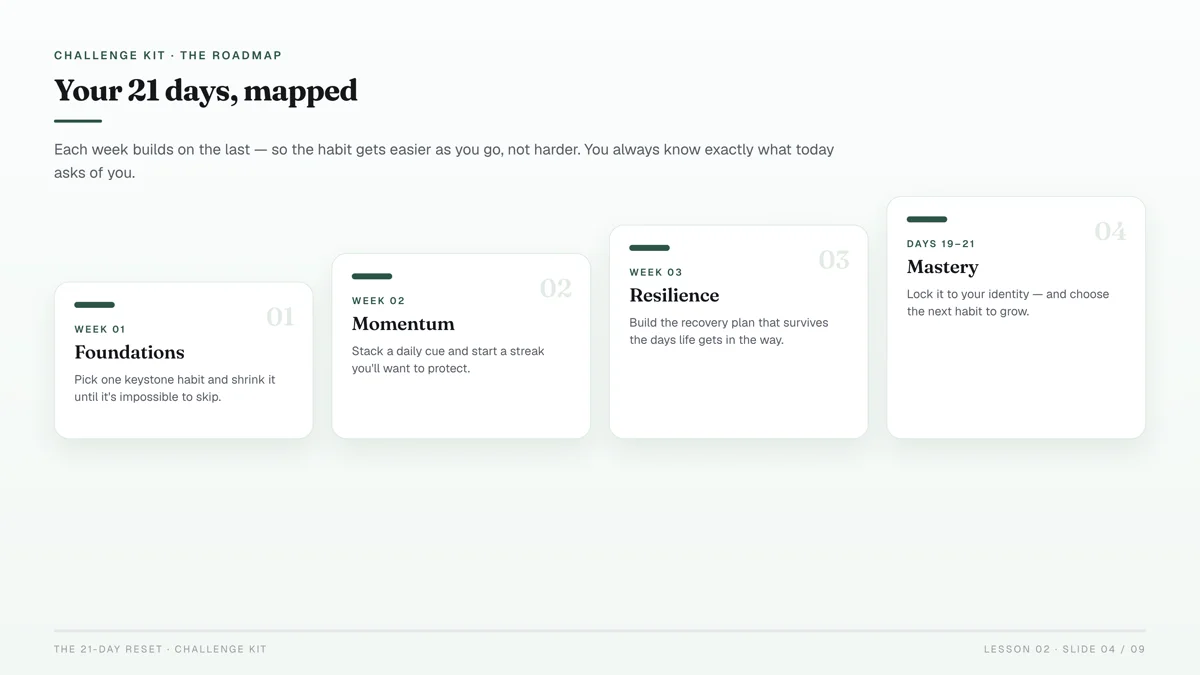
Creating your first digital product doesn't have to be overwhelming. Break it down into manageable steps, and remember that perfection is the enemy of progress.
Step 1: Identify a Problem Your Audience Has (Validation is Key)
Do not guess what your audience wants. Ask them. This is where your 500 followers are a massive advantage.
- Polls: Use Instagram Stories, Facebook Groups, or Twitter polls. "What's your biggest struggle with X?"
- DMs/Comments: Pay attention to questions that come up repeatedly. "I often get asked how I organize my tasks."
- Surveys: Use free tools like Google Forms to ask more detailed questions. "What would make your life easier when it comes to [your niche topic]?"
Look for common pain points. If multiple people express the same need, you've found a potential product idea. For instance, if your followers are constantly asking how you manage your content calendar, a "Content Planner Template" or a "Guide to Efficient Content Batching" could be a hit.
Step 2: Outline and Create Your Product
Once you've identified a problem, structure your solution.
- Outline: Break down your product into key sections, steps, or modules. For an e-book, this means chapters. For a template, this means the key features and how they address the problem.
- Choose Your Tools:
- E-books/Guides: Google Docs, Notion, Canva.
- Templates: Canva (for graphic templates), Notion (for productivity templates), Google Sheets (for spreadsheets).
- Mini-Courses: Loom (for screen recordings), smartphone (for talking head videos), Google Slides/Canva (for presentation slides).
- Presets: Adobe Lightroom.
- Create the Content: Focus on clarity, conciseness, and actionability. Your product should deliver a tangible benefit or transformation. Don't overcomplicate it. The goal is to solve one specific problem well.
Don't aim for a massive product for your first launch. A small, high-quality, focused solution (e.g., a 20-page e-book or a single robust template) is far better than an unfinished, sprawling project. You can always expand later.
Step 3: Design and Package
Even if your product is information-based, good design makes a huge difference.
- Branding: Use consistent fonts, colors, and your logo (if you have one).
- Readability: For text-based products, use clear headings, bullet points, and ample white space.
- Visual Appeal: For templates or printables, ensure they are aesthetically pleasing and easy to understand.
- Mockups: Create professional-looking mockups of your product for your sales page. Canva has excellent mockup templates.
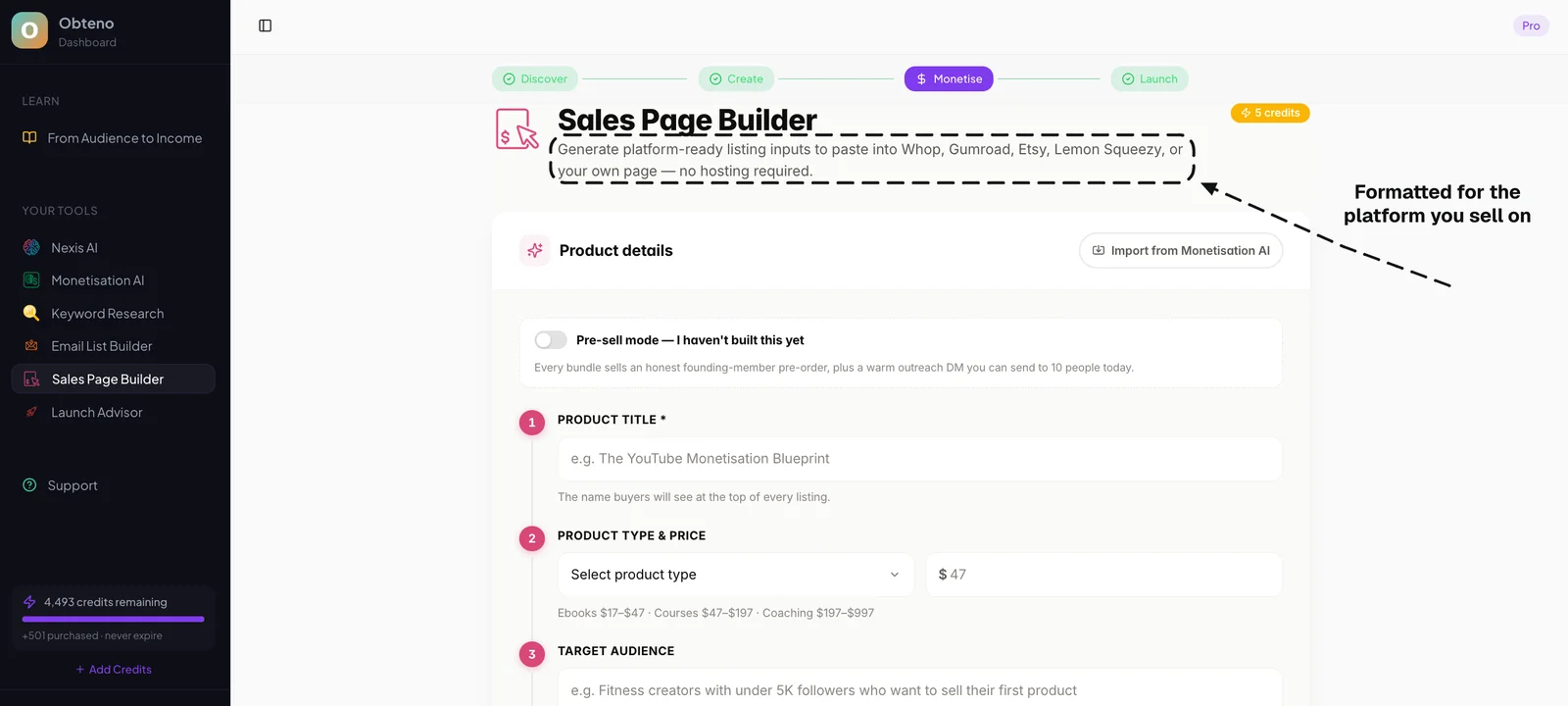
This is where Obteno comes in: it builds the ebook, the template pack or the course outright — pages, cover, packaged files and the listing copy.
Step 4: Test and Refine
Before launching, get a few trusted followers or friends to test your product.
- Do they understand it?
- Does it solve the problem effectively?
- Are there any typos or technical glitches?
- What feedback do they have to improve it?
Implement their suggestions. This small step can significantly boost the quality and perceived value of your product.
Which Platform Is Best for Selling Digital Products? (Comparison)
Choosing the right platform is crucial. It needs to be easy to use, handle payments securely, and allow you to deliver your digital files without a hitch. Here’s a comparison of popular options for small creators:
| Feature | Gumroad | Etsy (for Digital Downloads) | Shopify Lite / Basic |
|---|---|---|---|
| Best For | Direct sales, creators building an audience | Crafters, artists, template sellers, established marketplaces | Growing brands, multiple products, full control |
| Ease of Setup | Very Easy (minutes) | Easy (set up shop, list product) | Moderate (requires some learning curve) |
| Fees | 10% per transaction (for free plan) or flat monthly Gumroad Pricing | $0.20 listing fee + 6.5% transaction fee + payment processing fee Etsy Fees | $29/month (Basic) + payment processing fees Shopify Pricing |
| Audience | You bring your own audience | Built-in marketplace audience (discovery potential) | You bring your own audience |
| Customization | Limited landing page customization | Shop branding, product photos | Full control over storefront design |
| Features | Email marketing, upsells, customer management | Shop stats, marketing tools, customer reviews | Full e-commerce suite, apps, advanced analytics |
| Pros | Simplicity, low barrier to entry, creator-focused | Huge existing customer base, trusted platform | Scalable, professional, complete control |
| Cons | Relies on your own marketing, higher transaction fees for free plan | Niche restrictions, competition, Etsy's rules apply | Monthly fee, more complex for beginners |
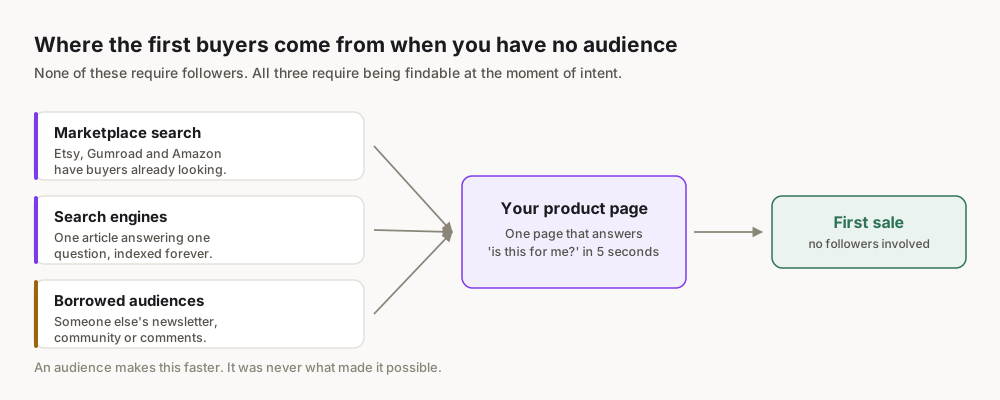
For most beginners with 500 followers, Gumroad is often the ideal starting point. Its simplicity allows you to get a product up and selling quickly, without needing a website. You just create a product, upload your files, and share a link. If your products align with the craft/art/template niche, Etsy offers a massive built-in audience, but you'll contend with more competition and specific rules. Shopify is excellent for scaling but typically overkill for a first product with a small audience due to the monthly fee and complexity.
How to Price Your Digital Products for Profit
Pricing is not just about covering costs; it's about communicating value and ensuring profitability. Don't fall into the trap of underpricing because you have a small audience or are new.
1. Value-Based Pricing
Instead of pricing based on the hours you spent or the number of pages, price based on the value or transformation your product provides.
- Example: A Notion template that saves someone 5 hours a week in content planning is worth far more than a $5 template. If that time is worth $50/hour to them, the template could easily be worth $50-$100.
- Consider the problem: How much pain does your product alleviate? How much time, money, or effort does it save?
2. Psychological Pricing
Small tweaks can make a big difference in how your price is perceived.
- Charm Pricing: Ending prices with .99 (e.g., $19.99 instead of $20) makes them appear lower.
- Price Anchoring: If you have multiple products, putting a higher-priced item next to a lower-priced one can make the latter seem like a better deal.
- Bundling: Offer a package deal (e.g., your template + a bonus guide) at a slightly higher price than your core product. This increases the perceived value.
3. Tiered Pricing (for more complex products)
If your product has different levels of features or support (e.g., basic template vs. template + video tutorial vs. template + 1-on-1 setup call), offer tiered pricing. This caters to different budgets and needs.
4. Don't Underprice Your Expertise
Many creators undervalue their work, especially when starting. Your unique perspective, experience, and the solution you've crafted are valuable. Research what similar products sell for, but don't just match the lowest price. Aim for a price that feels fair to you and reflects the value your customer receives.
Start with a slightly higher price than you think, and consider offering an introductory discount for your launch to create urgency. It's easier to lower a price than to raise it later.
Selling to Your 500 Followers: The Launch Strategy
With your product ready and priced, it's time to sell. Your 500 followers are your most valuable asset here.
1. Build Anticipation (Pre-Launch)
Don't just drop a link. Start talking about the problem your product solves before it's ready.
- Teasers: Share snippets, behind-the-scenes content, or sneak peeks.
- Countdown: Use Instagram Story countdowns or create a simple landing page to collect emails for early access notifications.
- Direct Engagement: Respond to every question, build excitement in DMs, and highlight how this product will specifically help them.
2. Direct Communication is Key (Launch Day)
Your small audience thrives on personal connection.
- Email List: If you have even a tiny email list, this is your #1 sales channel. Send a dedicated launch email.
- Personal DMs: Reach out to followers who previously expressed interest in the problem your product solves. "Hey [Name], remember you mentioned struggling with X? I just launched a solution that might help!"
- Storytelling: On your social channels, don't just post a sales graphic. Tell the story of why you created this product, who it's for, and how it will transform their experience.
- Call to Action: Make it clear and easy to understand what you want them to do (e.g., "Click the link in bio to get your copy now!").
3. Offer an Exclusive Launch Bonus or Discount
To incentivize early purchases and reward your loyal followers:
- Limited-Time Discount: "Get 20% off for the first 48 hours!"
- Bonus Content: "Buy in the first week and get a bonus checklist/mini-template!"
- Early Bird Access: Offer your product to your email list or a select group of followers first.
4. Leverage Social Proof (Post-Launch)
As soon as you get sales and positive feedback, share it.
- Testimonials: Ask early buyers for short reviews or quotes. "This template saved me hours!"
- Sales Milestones: "Wow, 50 sales in the first day! Thank you all!"
- User-Generated Content: If customers share how they're using your product, reshare it (with permission).
These actions validate your product and encourage others to buy.
Growing Beyond 500: Scaling Your Impact and Income
Making your first sales with 500 followers is a huge win. But this is just the beginning. Here's how to expand your reach and revenue:
1. Content Repurposing and Diversification
Don't let your valuable content sit in one place.
- Blog Posts from E-books: Turn chapters of your e-book into blog posts, linking back to the full product.
- Video Tutorials from Guides: Create short video tutorials based on steps in your guide.
- Social Media Snippets: Extract key tips, quotes, or visuals from your product for daily social media content.
- New Product Lines: Once you have one successful product, create complementary ones (e.g., if a planner sells well, create an accompanying journal or sticker pack). Obteno builds each new variation the same way, and keeps them and their listing copy together.
2. Optimize for Search and Discovery
While your 500 followers are great, you need new eyes.
- Etsy SEO: If on Etsy, use relevant keywords in your product titles, tags, and descriptions.
- Pinterest: Create visually appealing pins that link directly to your product or a blog post promoting it. Pinterest is a powerful visual search engine.
- Google Discoverability: For blog posts promoting your products, research relevant keywords and optimize your content.
3. Build and Nurture an Email List
Your email list is your most valuable asset, even more so than your social media following because you own it.
- Lead Magnet: Offer a free mini-guide, checklist, or template in exchange for an email address.
- Regular Value: Send out newsletters with tips, insights, and occasional product promotions.
- Segment Your List: Tailor offers to specific interests within your audience.
4. Strategic Collaborations
Partner with other creators who have a similar audience but aren't direct competitors.
- Joint Webinars: Co-host a free workshop and promote each other's products.
- Bundle Deals: Create a joint product bundle.
- Guest Content: Write a guest blog post for their audience or appear on their podcast, mentioning your product.
5. Leverage Paid Traffic (When Ready)
Once your product is proven and profitable, consider investing in targeted ads.
- Facebook/Instagram Ads: Target specific demographics and interests that align with your ideal customer.
- Pinterest Ads: Promote your best-performing pins to reach a wider audience.
- Google Ads: If your product solves a clear search intent, like "best budget planner template," Google Ads can be effective.
Start small, test your ads, and scale what works. The goal is to turn every dollar spent on ads into more than a dollar in sales.
Frequently Asked Questions
How much can I realistically make with 500 followers?
Nobody can tell you that, and a percentage pulled out of the air is worse than no answer. A 500-person audience is small enough that the outcome depends almost entirely on how well the product fits the specific reason those people followed you. Do the arithmetic with your own numbers rather than a borrowed conversion rate: price × the number of people who actually buy. Then find out what that second number really is by launching something small. For scale, the one figure here that comes from a receipt: Obteno's founder built a $23,718 digital-product business in 60 days. That is a data point, not a forecast for a 500-person audience.
Do I need a website to sell digital products?
No, you don't need a full website to start. Platforms like Gumroad allow you to create a simple product page and accept payments without any coding. Etsy provides a storefront within its marketplace. While a dedicated website offers more control and branding in the long run, it's not a prerequisite for making your first sales.
What if my product isn't perfect?
"Done is better than perfect." Your first product won't be flawless, and that's okay. The most important thing is to launch, gather feedback from your customers, and iterate. Digital products are easy to update, so you can always improve and refine your offering based on real-world usage. Waiting for perfection means you'll never launch.
How long does it take to see results?
You can make your first sale within days or weeks of launching a well-validated product. The speed depends on how well you've connected with your audience, the value of your product, and your launch efforts. Consistent effort in promotion and audience engagement will lead to more sustained results over time.
What are the legal considerations for selling digital products?
Generally, you'll need to consider basic business registration (sole proprietorship, LLC), tax obligations (sales tax, income tax), and terms of service for your product. If you're using third-party platforms like Gumroad or Etsy, they handle much of the payment processing and tax collection on their end, but it's always wise to consult with a local legal or tax professional for advice specific to your region and business.
Can I sell multiple digital products at once?
Absolutely! Once you have one successful product, you can create complementary items or diversify into other product types. Many creators build an entire ecosystem of digital products, from free lead magnets to high-ticket courses. This allows you to serve your audience at different price points and build multiple income streams.