
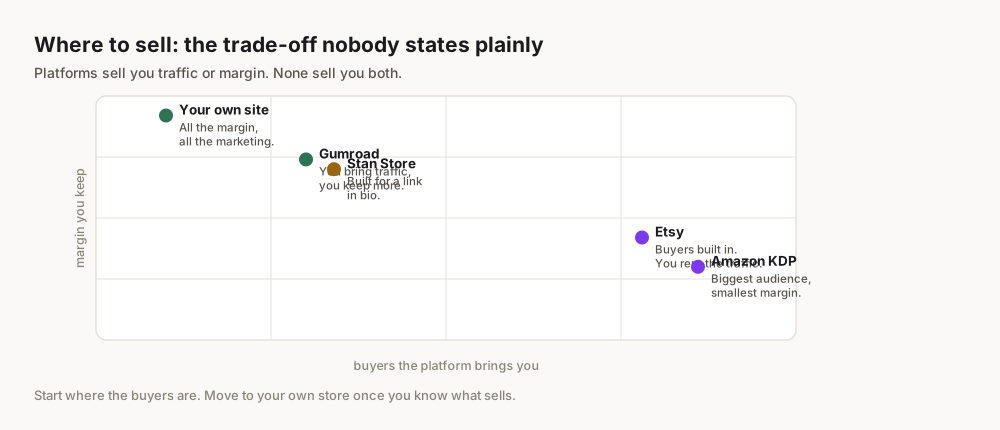
The digital product market is experiencing an unprecedented boom globally. This growth isn't just for tech giants; it's creating immense opportunities for individual creators, educators, and entrepreneurs like you. But for a beginner, the sheer number of platforms can feel like a labyrinth. You’ve likely googled "Gumroad vs Etsy vs Stan Store" because you're ready to sell, but you're overwhelmed by choice, worried about picking the wrong one, and eager to make your first sale without unnecessary headaches.
Choosing the right platform isn't just about features; it's about aligning with your goals, your product, and your comfort level with marketing. This isn't a decision to take lightly, as a misstep can cost you time, effort, and potential income. This guide cuts through the noise, providing the most in-depth, actionable comparison you'll find, designed specifically for beginners like you. By the end, you'll know exactly which platform offers the clearest path to launching and scaling your digital product business in 2026 and beyond.
The Beginner's Dilemma: Why Platform Choice Matters
When you're just starting out, every decision feels monumental, and choosing where to sell your digital products is no exception. This isn't just about where your files live; it's about your entire business ecosystem: how customers find you, how they pay, how you deliver your product, and how much of your hard-earned money you keep.
The "beginner's dilemma" stems from several core concerns:
- Fear of Complexity: Many beginners worry about intricate setup processes, coding, or steep learning curves that can delay their launch.
- Marketing Overwhelm: "How will people find my product?" is a common question. The promise of built-in audiences versus needing to generate your own traffic is a major consideration.
- Cost & Fees: Understanding different fee structures – listing fees, transaction fees, monthly subscriptions – is critical to profitability, especially when sales are just starting to trickle in.
- Scalability: While you're a beginner today, you won't be forever. You need a platform that can grow with you, allowing for more products, advanced features, and a stronger brand presence down the line.
Ultimately, the right platform simplifies your entry into the market, reduces friction for your first customers, and allows you to focus on what truly matters: creating valuable digital products. Let's dive into the specifics of Etsy, Gumroad, and Stan Store to demystify each option.
Etsy: The Marketplace Powerhouse for Crafted Digital Goods
Etsy is an e-commerce giant, primarily known for handmade, vintage, and craft supplies. However, it has become a thriving marketplace for digital products that align with its aesthetic and audience. Think digital planners, printable art, social media templates, mockups, and educational resources.
Why Etsy Appeals to Beginners
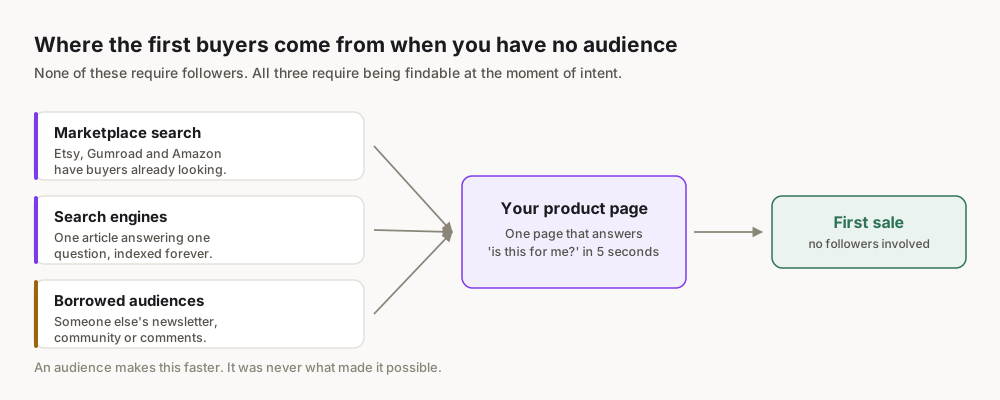
The biggest draw of Etsy for beginners is its built-in audience. With hundreds of millions of visitors each month, Etsy acts as a massive search engine for unique products. This means you don't necessarily need to be a marketing expert from day one; Etsy brings potential customers directly to your digital doorstep. Many beginners report their first sales coming from Etsy's organic search and recommendations, which is incredibly encouraging.
- Massive Existing Audience: You're placing your product in front of buyers actively looking for what you offer. This significantly reduces the initial marketing heavy lifting.
- Trusted Brand: Etsy is a globally recognized and trusted platform. Buyers feel secure making purchases, which can lower barriers to entry for new sellers.
- Relatively Easy Setup: Creating a shop and listing a digital product is straightforward. The interface is intuitive, guiding you through the process of uploading files, adding descriptions, and setting prices.
- SEO Tools: Etsy has its own search algorithm. By optimizing your listings with relevant keywords, you can improve your visibility within the marketplace.
- Marketing & Advertising Options: While you can rely on organic traffic, Etsy also offers internal advertising tools to boost your listings.
The Trade-offs of Selling on Etsy
While the built-in audience is a huge advantage, it comes with certain limitations and costs:
- High Competition: Because of the large audience, there are also many sellers. Standing out requires high-quality products, excellent photography (even for digital items, mockups are key), and strong SEO.
- Fees Can Add Up: Etsy charges a listing fee ($0.20 per item, good for 4 months), a transaction fee (6.5% of the total sale price, including shipping), and a payment processing fee (usually 3% + $0.25). These fees reduce your profit margins.
- Limited Branding & Customization: Your shop will always live within the Etsy ecosystem. While you can customize your banner and shop icon, you have less control over the look and feel compared to having your own website or Gumroad page.
- Platform Rules & Restrictions: Etsy has strict rules about what can be sold and how. Digital products must fit the "handmade" or "vintage" ethos, even if they're instantly downloadable. This might restrict certain types of digital goods (e.g., complex software).
- Customer Relationship: Etsy owns the customer relationship. While you can communicate with buyers, you don't directly get their email addresses for future marketing outside the platform.
Who is Etsy Best For?
Etsy is the strongest contender for beginners selling:
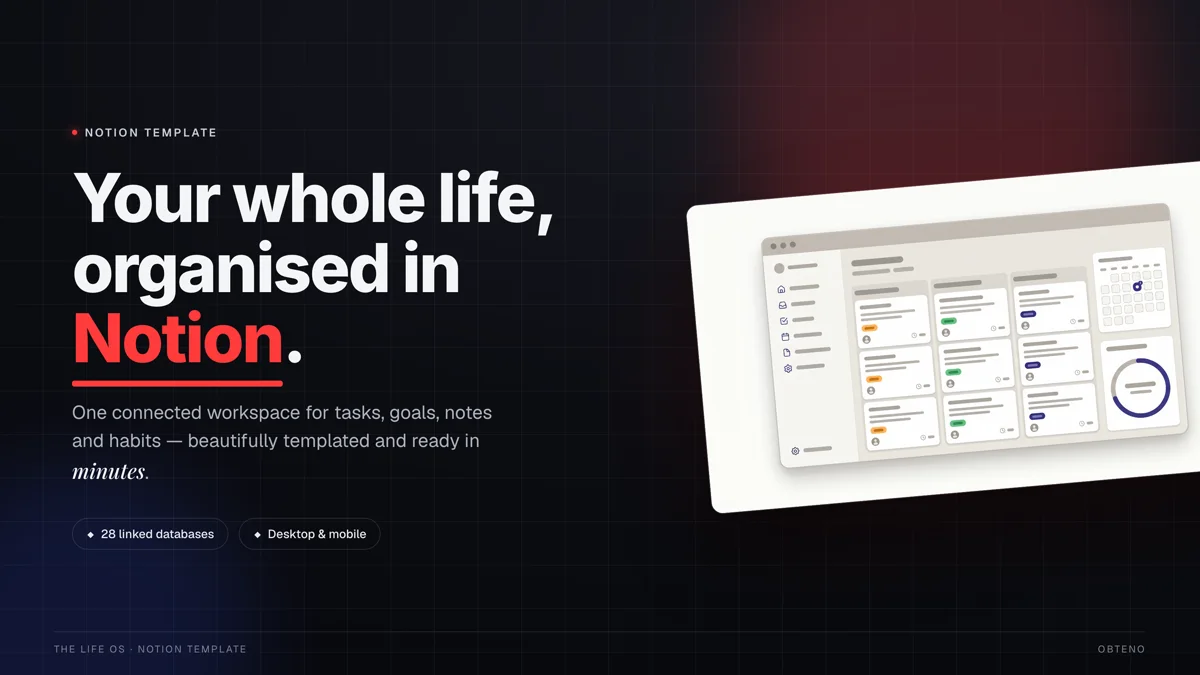
- Visually-driven digital products: Planners, journals, stickers, art prints, mockups, templates (social media, wedding, business cards).
- Niche products: Items that fit Etsy's creative, craft, or unique aesthetic.
- Those who prefer an existing audience: If you're not ready to drive your own traffic, Etsy provides a strong starting point.
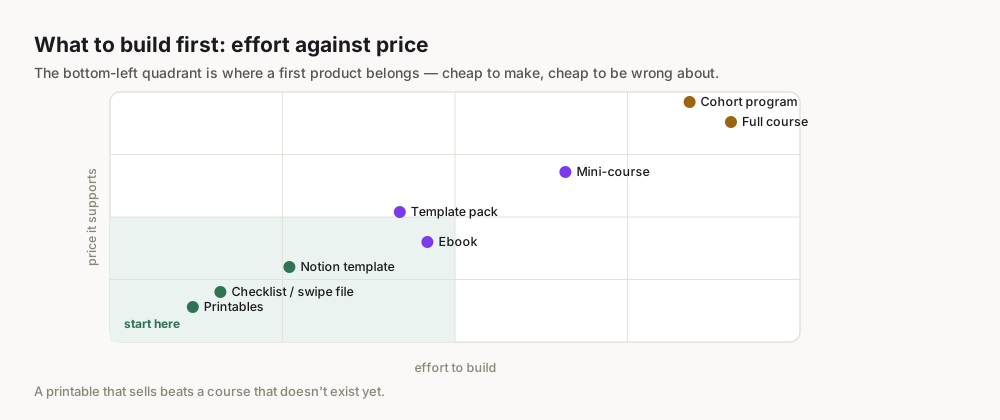
- Creators testing ideas: Low barrier to entry to validate product concepts.
To stand out on Etsy, invest time in creating compelling mockups for your digital products. Tools like Canva or Adobe Photoshop can help you display your printables or templates on realistic surfaces, making them more appealing to buyers who can't physically touch the product.
Gumroad: The Creator's Canvas for Direct Sales
Gumroad is a powerful e-commerce platform designed specifically for creators to sell products directly to their audience. It's a highly flexible tool that supports a vast array of digital products, from ebooks and courses to software and memberships. Unlike Etsy, Gumroad doesn't provide a built-in audience; instead, it empowers you to build and nurture your own.
Why Gumroad is a Favorite Among Established Creators
Gumroad puts the creator in the driver's seat, offering unparalleled control and flexibility. This makes it a powerful choice for those looking to build a sustainable, long-term digital product business.
- Full Ownership & Branding: Your Gumroad product pages can be extensively customized to match your brand. You own the customer data, allowing you to build direct relationships and market future products.
- Versatile Product Types: Gumroad handles almost any digital product imaginable: ebooks, courses, memberships, subscriptions, audio, video, software licenses, physical goods, and even pre-orders.
- Flexible Pricing Models: Offer one-time purchases, subscriptions, pay-what-you-want options, and even different tiers for your products. This flexibility is crucial for maximizing revenue.
- Powerful Email Marketing: Collect customer emails during purchase and use Gumroad's built-in email features to communicate directly, offer updates, and promote new products. This is vital for repeat business.
- No Listing Fees: You only pay when you make a sale. Gumroad's transaction fees scale down as your lifetime earnings increase, rewarding successful creators.
- Affiliate Program Functionality: Easily set up an affiliate program for your products, allowing others to promote your work for a commission, expanding your reach.
- Advanced Analytics: Gain deep insights into your sales, traffic sources, and customer behavior, helping you optimize your strategy.
The Marketing Challenge of Gumroad
The primary challenge with Gumroad is also its greatest strength: you are responsible for driving your own traffic.
- No Built-in Audience: Unlike Etsy, Gumroad isn't a marketplace. You need a marketing strategy to get eyes on your products, whether through social media, content marketing (blogging, YouTube), email lists, or paid advertising.
- Requires More Effort Upfront: Setting up a product page is easy, but getting consistent sales requires active promotion and audience building. This can be daunting for absolute beginners without an existing platform.
- Transaction Fees: Gumroad charges a flat transaction fee per sale, which starts at 10% for new creators and decreases as you earn more (e.g., 7% for $1K-$10K, 5% for $10K-$100K, etc.). Plus, payment processing fees (e.g., Stripe, PayPal) are added on top.
- Steeper Learning Curve for Advanced Features: While basic setup is simple, leveraging Gumroad's full power for memberships, custom workflows, or integrations requires more exploration.
Who is Gumroad Best For?
Gumroad is an excellent choice for:
- Creators building a brand: If you want to own your audience and customer relationships.
- Entrepreneurs selling information products: Ebooks, online courses, templates, workshops, digital tools.
- Those with an existing audience: If you have followers on social media, a blog, or an email list.
- Users who need flexibility: If you plan to offer subscriptions, pay-what-you-want, or a diverse range of product types.
- Beginners willing to learn marketing: If you're ready to put in the work to drive your own traffic.
I sold $23,718 of digital products in 60 days, so I'll be blunt about the trade-offs. Gumroad is built for direct sales: it leaves you a larger share of your revenue and puts you in a direct relationship with the people buying from you, rather than renting you space on someone else's marketplace.
Building your first product as you read this? Obteno's free course walks you through every step — completely free, no card needed.
Stan Store: The Link-in-Bio Solution for Social Sellers
Stan Store (often just called "Stan") is a relative newcomer, designed specifically for social media creators, coaches, and influencers. It's an all-in-one "link-in-bio" storefront that simplifies selling digital products directly from platforms like Instagram, TikTok, and YouTube. Instead of linking to multiple places, your single Stan Store link leads to a sleek, mobile-optimized page where your audience can browse and buy everything you offer.
Why Social Media Creators Love Stan Store
Stan Store's appeal lies in its simplicity and seamless integration with the social media landscape. It's built for quick conversions and monetizing an engaged online audience.
- Incredibly Easy Setup: You can create a professional-looking storefront in minutes, even on your phone. It's designed for speed and minimal technical fuss.
- Mobile-First Design: Optimized for the way most social media users browse – on their phones. The user experience is smooth and intuitive.
- All-in-One Link-in-Bio: Consolidate all your offerings (digital products, courses, coaching calls, affiliate links, email sign-ups) into one clickable link, perfect for your social media bios.
- Zero Transaction Fees (Beyond Payment Processor): Stan Store charges a monthly subscription, but takes no additional cut from your sales. You keep 100% of your product revenue, minus standard payment processing fees (Stripe, PayPal).
- Built-in Email Marketing & Funnels: Capture leads and create simple email sequences directly within Stan Store, allowing you to nurture your audience.
- Course & Membership Functionality: Easily host and sell online courses, workshops, and membership programs without needing complex external platforms.
- Direct Integrations: Connects seamlessly with popular tools like Stripe, PayPal, Mailchimp, and Zapier.
The Limitations of Stan Store
While powerful for social sellers, Stan Store has its own set of trade-offs:
- Monthly Subscription Fee: Unlike Etsy (which has listing fees) or Gumroad (which is free to start, taking a percentage), Stan Store requires a recurring monthly payment (e.g., $29/month for the Creator plan, $99/month for the Pro plan). This can be a hurdle for beginners with zero sales.
- Limited Customization: While the templates are clean and modern, customization options are less extensive than a dedicated website or Gumroad. Your storefront will look similar to other Stan Stores.
- Relies on Your Audience: Like Gumroad, Stan Store does not provide a built-in audience. Your success is directly tied to your ability to drive traffic from your social media channels.
- Less Robust for Complex Products: While it handles courses and digital products well, it might be less suitable for highly complex software or advanced subscription models compared to Gumroad.
Who is Stan Store Best For?
Stan Store shines for:
- Social media influencers & coaches: Anyone with an active social media presence looking to monetize their audience directly.
- Beginners who prioritize simplicity: If you want a quick, easy, and mobile-friendly way to start selling.
- Creators selling a variety of offerings: Digital products, coaching calls, mini-courses, affiliate links, email sign-ups – all in one place.
- Those comfortable with a monthly fee: If you're confident in your ability to generate sales that outweigh the subscription cost.
Platform Comparison: Etsy vs. Gumroad vs. Stan Store
To help you visualize the key differences, here's a direct comparison of the three platforms:
| Feature | Etsy | Gumroad | Stan Store |
|---|---|---|---|
| Target Audience | Buyers of handmade, vintage, unique goods | Creators' existing audience | Social media followers & community |
| Best For | Digital planners, art prints, templates | Ebooks, courses, software, memberships | Link-in-bio, coaching, mini-courses, quick sales |
| Ease of Setup (Beginner) | Very Easy (Shop & Listing) | Easy (Product Page) | Very Easy (Mobile-first storefront) |
| Pricing Model | Listing fee + Transaction fee + Payment proc. | Transaction fee (scales down) + Payment proc. | Monthly subscription + Payment proc. (no % cut) |
| Branding Control | Limited (within Etsy ecosystem) | High (customizable product pages) | Moderate (clean templates, limited deep customization) |
| Built-in Traffic | High (marketplace audience) | None (you bring your own) | None (you bring your own via social) |
| Product Variety | Niche digital items (crafts, printables) | Broad (info products, software, subscriptions) | Digital products, courses, coaching, memberships |
| Customer Relationship | Managed by Etsy, limited direct contact | Direct, own customer data & email list | Direct, email collection & funnels built-in |
| Key Differentiator | Marketplace discovery | Creator ownership & flexibility | Social-first monetization & simplicity |
Who Should Sell Where? Matching Your Goals to the Right Platform
The "best" platform isn't universal; it's deeply personal to your situation. Let's break down which platform aligns with different beginner profiles and goals.
For the Absolute Beginner Seeking Quick Wins (Etsy)
If you're completely new to selling online, have a visually appealing digital product, and want to make your first sale with the least amount of marketing effort, Etsy is likely your best starting point.
- Your product: Digital planners, printable art, social media templates, customizable invitations, mockups, digital stickers.
- Your goal: Validate an idea, make your first few sales, understand the e-commerce process, and leverage an existing audience.
- Your marketing comfort: Low. You prefer to rely on the platform's traffic.
Start here to get a taste of selling. The initial fees are low, and the process is guided. Focus on creating high-quality, in-demand products and optimizing your Etsy SEO.
For the Creator Building a Long-Term Brand and Audience (Gumroad)
If you have a clear vision for your brand, understand the importance of owning your customer relationships, and are willing to put in the work to build an audience, Gumroad is your long-term powerhouse.
- Your product: Ebooks, online courses, software, memberships, premium templates, digital tools, unique intellectual property.
- Your goal: Build a direct relationship with your customers, scale your offerings, create multiple streams of income, and have full control over your brand.
- Your marketing comfort: Medium to high. You're ready to engage in content marketing, social media promotion, and email list building.
Gumroad is free to start, so you can set up your product and only pay when you make a sale. This makes it accessible even if you're building your audience from scratch. It's the mistake we see most beginners make—underestimating the power of owning their audience.
For the Social Media Influencer or Coach (Stan Store)
If your primary platform is social media (Instagram, TikTok, YouTube), you have an engaged audience, and you want the simplest, most elegant way to sell directly from your link-in-bio, Stan Store is your ideal solution.
- Your product: Mini-courses, coaching packages, digital guides, templates, preset packs, affiliate links, exclusive content access.
- Your goal: Monetize your social media presence directly and efficiently, offer a range of products and services from one link, and maintain a professional image.
- Your marketing comfort: High, specifically within social media. You know how to engage your followers and drive them to your link-in-bio.
While it has a monthly fee, Stan Store's value proposition of zero transaction fees on sales means if you have a consistent flow of sales, it quickly becomes cost-effective.
Can You Use More Than One Platform?
Absolutely! Many successful creators adopt a hybrid strategy.
- You might start on Etsy to get initial sales and validation, then use Gumroad to launch more in-depth courses or exclusive content to your growing email list.
- A social media creator might use Stan Store for quick, impulse buys from their followers, while also having a Gumroad store for their flagship course or membership program.
The key is to understand each platform's strengths and use them strategically to complement each other, rather than splitting your focus too thinly.
Beyond the Platform: What You Need to Succeed (No Matter Where You Sell)
Choosing the right platform is a critical first step, but it's just that – a step. True success in selling digital products comes from a combination of factors that transcend any single platform.
- High-Quality Digital Products:
- Value: Does your product solve a problem, entertain, or educate? It must provide genuine value.
- Design & User Experience: Even digital products need to look good and be easy to use. A poorly designed template or a confusing ebook will lead to refunds and bad reviews.
- Testing: Thoroughly test your product before launch. Check links, formatting, and file compatibility.
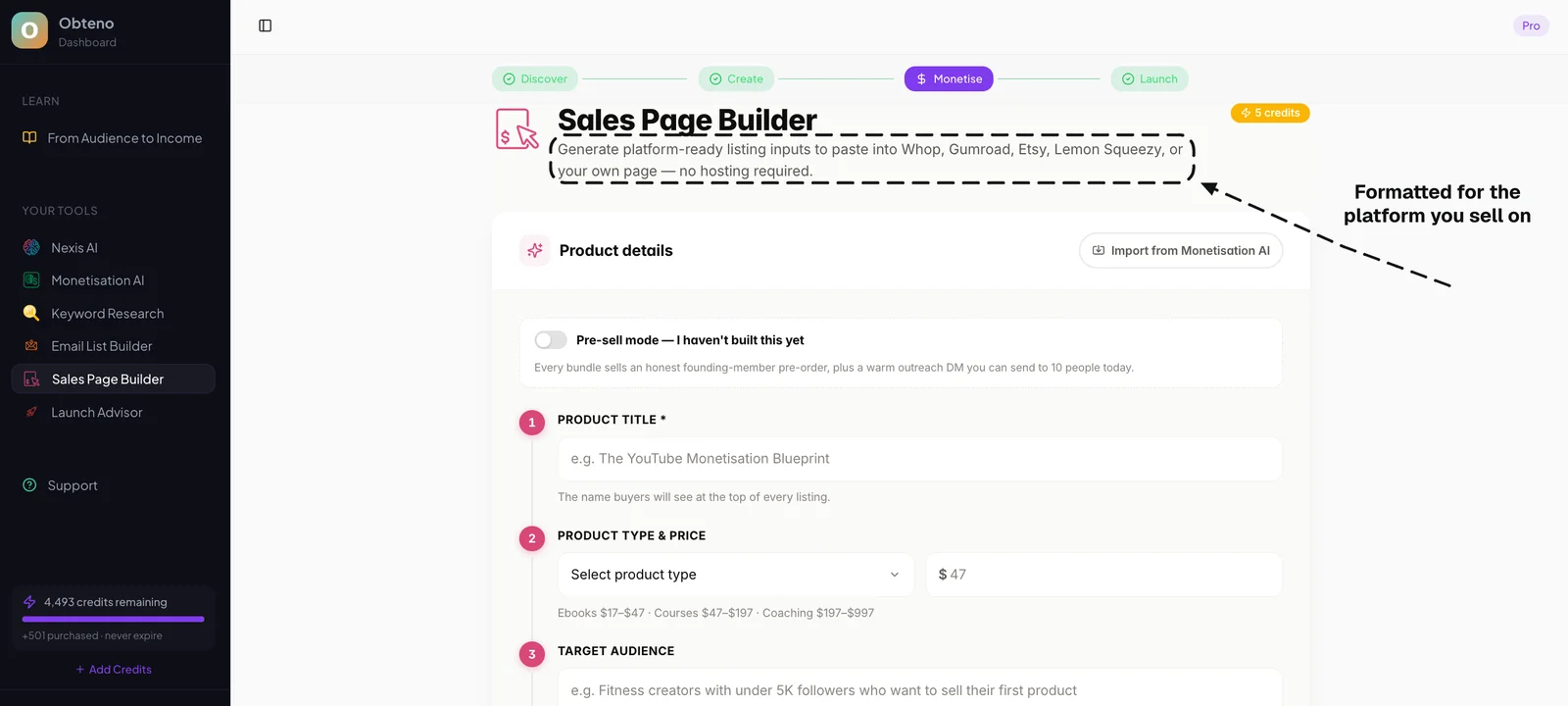
- Obteno builds the product and writes the listing fields for whichever of these you pick — you paste them in and sell there.
- Effective Marketing & Promotion:
- Know Your Audience: Understand who you're selling to, their pain points, and where they spend their time online.
- Content Creation: Whether it's blog posts, YouTube videos, social media content, or podcasts, create content that attracts your ideal customer.
- SEO: Optimize your product titles, descriptions, and tags with relevant keywords to improve discoverability, both within marketplaces (Etsy) and search engines (Gumroad, Stan Store).
- Email Marketing: Start building an email list from day one. It's the most powerful tool for direct communication and repeat sales.
- Social Media Engagement: Don't just post; engage with your audience, answer questions, and build a community.
- Compelling Product Presentation:
- Sales Page/Listing Optimization: Your product page needs to clearly articulate the value, include attractive visuals (mockups, screenshots), and have a clear call to action.
- Benefit-Driven Copy: Focus on what your product does for the customer, not just its features.
- Testimonials & Social Proof: As you get sales, collect positive reviews and showcase them to build trust.
- Exceptional Customer Service:
- Responsiveness: Answer questions promptly and professionally.
- Support: Be prepared to assist customers with downloads, technical issues, or questions about how to use your product.
- Feedback Loop: Listen to customer feedback to improve your products and offerings.
- Legal & Financial Foundations:
- Terms of Use: Clearly outline how your digital product can be used (e.g., personal use only, commercial license).
- Refund Policy: Have a clear refund policy in place.
- Taxes: Understand your tax obligations for digital product sales in your region. Consult a professional if needed.
No matter which platform you choose, remember that consistency and continuous learning are your greatest assets. The digital product landscape is always evolving, and staying adaptable will position you for long-term success.
Frequently Asked Questions
Can I sell the same digital product on multiple platforms simultaneously?
Yes, you absolutely can! Many creators adopt a multi-platform strategy to maximize their reach. For example, you might sell a digital planner on Etsy to tap into its marketplace audience, and simultaneously offer it on your Gumroad store to collect customer emails and build your direct audience. Just be mindful of platform-specific rules and ensure consistent pricing or clear distinctions if you offer different packages.
What are the typical fees I can expect when selling digital products?
Fees vary significantly by platform:
Do I need my own website to sell digital products?
Not necessarily, especially when starting out. Platforms like Etsy, Gumroad, and Stan Store provide all the necessary infrastructure to host your products, process payments, and deliver files without needing a separate website. However, having your own website or blog can be a powerful asset for building your brand, driving traffic, and diversifying your sales channels in the long run.
How do I drive traffic to my digital products as a beginner?
Driving traffic is crucial. For Etsy, focus on Etsy SEO (keywords, tags, compelling mockups) and leverage Etsy Ads. For Gumroad and Stan Store, you'll need to generate your own traffic. This means social media marketing (Instagram, TikTok, YouTube, Pinterest), content marketing (blogging, podcasting), email marketing (building a list), and potentially paid advertising (Facebook/Instagram Ads, Google Ads) as you scale.
What types of digital products sell best for beginners?
Products that offer immediate value, solve a common problem, or cater to a specific niche tend to perform well. Examples include: The key is to identify a need in a specific market and create a high-quality solution.
Is it really possible to make money selling digital products as a beginner?
Absolutely. The barrier to entry for selling digital products is remarkably low, and with strategic effort, beginners can certainly generate income. The key is to start with a valuable product, choose the right platform for your goals, and consistently promote your offerings. Focus on learning, iterating, and delivering excellent customer experiences, and you'll be well on your way to building a profitable digital product business.