
Imagine spending weeks crafting the perfect digital product – an insightful ebook, a stunning template, a transformative online course. You pour your heart into it, convinced it will change lives. Then you launch it, and… crickets. Sales trickle, or worse, don't materialize at all. The problem isn't your product; it's often your product description. A staggering 87% of online shoppers consider product descriptions "extremely important" when making a purchase decision, yet most creators treat them as an afterthought. This isn't just a missed opportunity; it's a sales killer.
This guide isn't about writing any description. It's about writing descriptions that convert browsers into buyers, turning your digital dreams into tangible revenue. We'll dive deep into the exact 7-step framework, focusing purely on description power. By the end, you'll have a proven strategy to make your digital products irresistible in 2026 and beyond.
Why Most Digital Product Descriptions Fail (And Yours Won't)
The digital product market is booming. This growth means more creators and more competition. Your product description is your storefront, your salesperson, and your trust-builder all rolled into one. Yet, most descriptions barely scratch the surface.
The Common Pitfalls: What to Avoid
Many creators fall into predictable traps that sabotage their sales:
- Feature-Dumping: Listing every detail without explaining its benefit. "Includes 10 Excel sheets" is a feature. "Organize your finances in minutes with 10 pre-built Excel templates, saving you hours of setup" is a benefit.
- Generic, Vague Language: Using buzzwords without substance. "Unlock your potential" or "revolutionary system" without concrete examples leaves buyers cold.
- Ignoring the Target Audience: Writing for everyone means writing for no one. If you don't speak directly to your ideal customer's needs, they won't feel understood.
- Weak or Non-Existent Call to Action (CTA): Buyers need clear instructions on what to do next. "Buy now" is good, but "Get instant access to your 2026 financial planner and start saving today!" is better.
- Poor Formatting & Readability: A dense wall of text is intimidating. Most people skim online; if your description isn't easy to digest, they'll leave.
- No SEO Consideration: Without relevant keywords, even the best description won't be seen by the right people on platforms like Etsy or Gumroad.
The Psychology of Digital Buyers: What They Really Want
Digital products are intangible. Buyers can't touch them, try them on, or physically inspect them. This creates a psychological hurdle. To overcome it, your description must tap into their core desires:
- Transformation: They don't want an ebook; they want the knowledge that transforms their skills. They don't want a template; they want the organized life it provides.
- Solutions to Problems: Every purchase is an attempt to solve a problem or fulfill a desire. Your description must articulate that problem and present your product as the definitive solution.
- Convenience & Speed: Digital products often promise instant gratification. Emphasize how easy, fast, and accessible your solution is.
- Trust & Credibility: Since they can't physically examine it, they need to trust you and the value you're promising. Clear, honest language, usage instructions, and guarantees (if applicable) build this trust.
- Immediate Value: What can they do with it right away? How quickly will they see results?
Think of your description as a bridge between your customer's current, problematic situation and their desired, improved future. Your digital product is the vehicle across that bridge.
The 7-Step Obteno Framework for High-Converting Descriptions
This framework breaks down the art of selling with words into actionable steps. Master these, and you'll see a dramatic shift in your conversion rates.
Step 1: Know Your Audience Inside Out (The "Who")
Before you write a single word, you must deeply understand who you're writing for.
- Create a Buyer Persona: Give them a name, an age, a profession. What are their biggest challenges related to your product? What are their aspirations? What kind of language do they use? For example, someone buying a "budgeting template for freelancers" has different pain points (unpredictable income, tax season stress) than someone buying a "family meal planner" (time scarcity, picky eaters).
- Identify Pain Points: What specific frustrations, fears, or problems does your audience experience that your product alleviates?
- Pinpoint Aspirations: What do they hope to achieve, learn, or become by using your product?
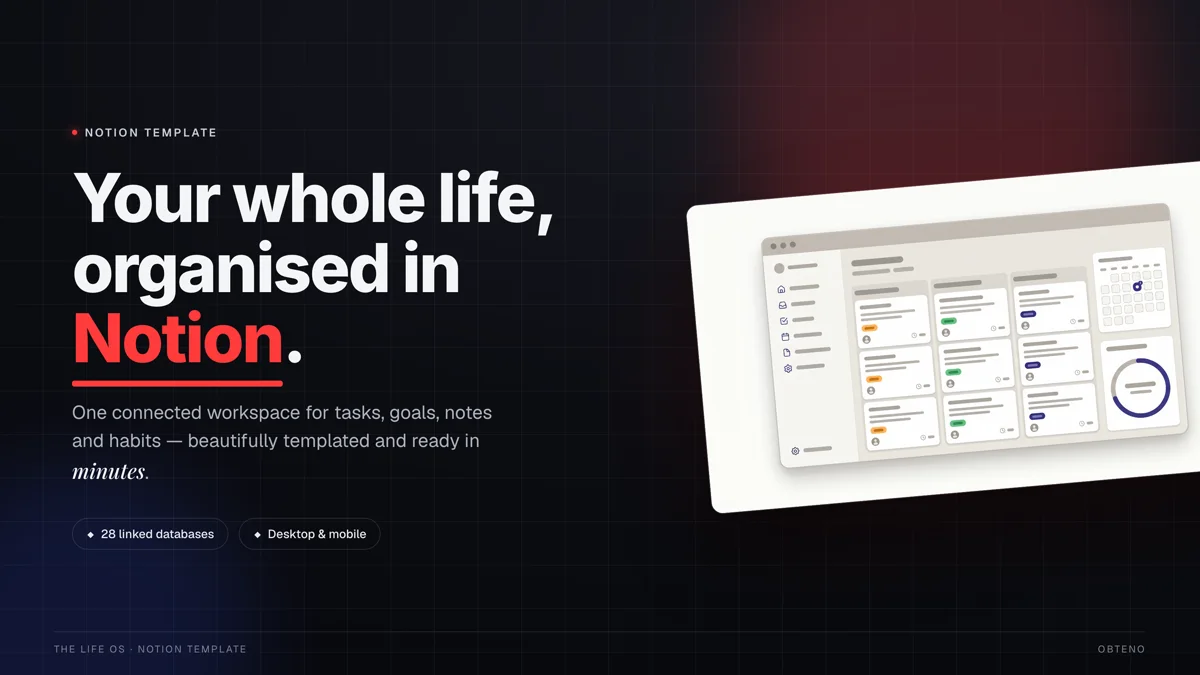
Example: If your product is a Notion template for content creators, your audience might be overwhelmed by content ideas, struggling with inconsistent posting, and aspiring to a more organized, productive workflow that frees up creative time.
Step 2: Define Your Product's Core Transformation (The "Why")
This is where you move beyond "what it is" to "what it does for them."
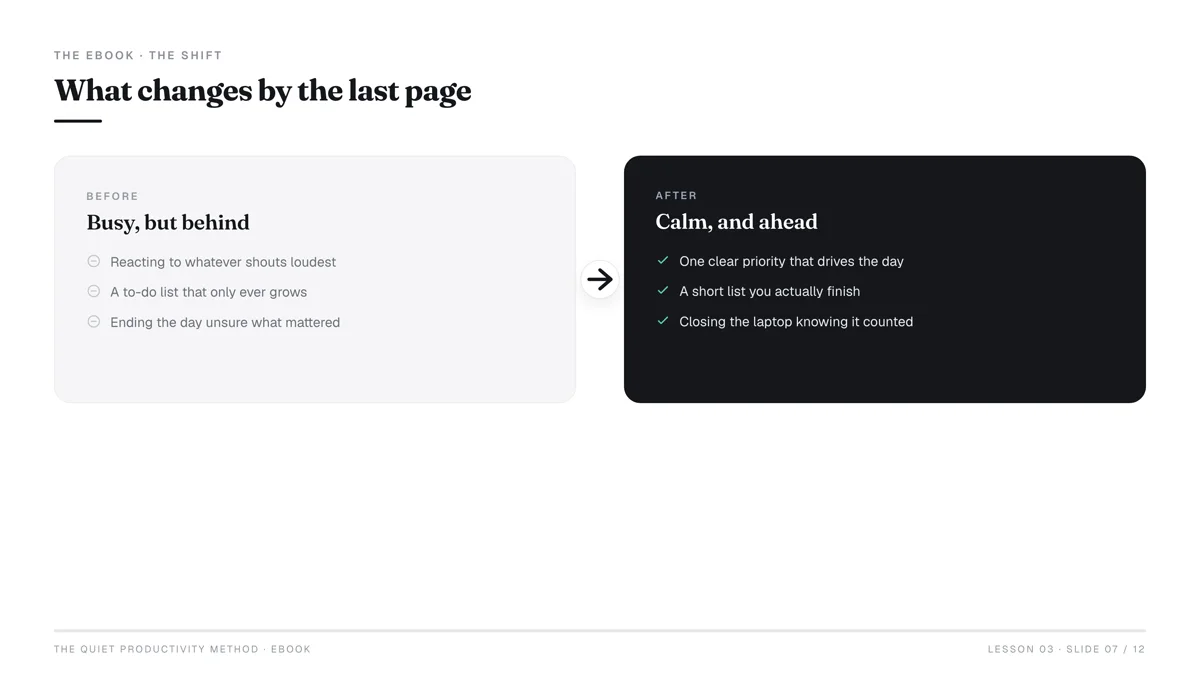
- The Before & After: Clearly articulate the user's state before using your product (stressed, disorganized, unskilled) and their state after (calm, efficient, expert).
- Instead of: "Productivity Planner with Daily Spreads."
- Try: "Go from overwhelmed and scattered to laser-focused and productive, finally achieving your goals with our Daily Productivity Planner."
- The Single Big Idea: What's the one most compelling outcome your product delivers? This becomes your central selling proposition. Is it saving time? Making money? Learning a new skill? Improving a relationship?
Step 3: Craft an Irresistible Headline & Opening (The "Hook")
Your headline is the first, and often only, chance to grab attention. The opening paragraph must immediately validate their search and draw them deeper.
- Benefit-Driven & Keyword-Rich: Your headline should promise a clear benefit and include your primary keywords.
- Emotional Connection: Use words that evoke feeling or curiosity.
Headline Formulas to Try:
- [Problem] Solved: [Your Product] for [Benefit]
- Example: "Freelancer Tax Stress Solved: The Ultimate Income & Expense Tracker for Easy Filing"
- How to [Achieve Desired Outcome] with [Your Product] in [Timeframe]
- Example: "How to Master Social Media Content Planning with Our 30-Day Planner in Just 1 Hour/Week"
- The [Adjective] [Product Type] for [Target Audience] Who Wants to [Benefit]
- Example: "The Essential Digital Planner for Busy Moms Who Want to Reclaim Their Time"
- [Number] Ways to [Benefit] with [Your Product]
- Example: "7 Ways to Boost Your Etsy Sales with Our Product Photo Presets"
Opening Paragraph: Expand on the headline, articulating the problem and hinting at the solution. Keep it concise, engaging, and focused on the reader.
Step 4: Detail Features as Benefits (The "What & How")
Now you can list what your product is, but always pivot to what it means for them.
- Feature → Benefit Conversion:
- Feature: "Includes 50 editable Instagram story templates."
- Benefit: "Save hours of design time and create stunning, cohesive Instagram stories in minutes, helping you attract more followers and boost engagement."
- Feature: "Interactive PDF workbook."
- Benefit: "Engage directly with the material and track your progress with our fillable PDF workbook, ensuring you apply what you learn for lasting results."
- Use Bullet Points: Break down information into easy-to-read chunks.
- What You'll Get:
- [Feature 1]: [Benefit 1]
- [Feature 2]: [Benefit 2]
- [Feature 3]: [Benefit 3]
- What You Can Achieve:
- Streamline your workflow and reclaim precious hours.
- Present a professional, polished brand image effortlessly.
- Gain clarity and confidence in your financial planning.
Step 5: Build Trust & Overcome Objections (The "Proof")
Digital products can feel like a leap of faith. Your description needs to provide reassurance.
- Anticipate Questions: Think like your potential buyer. What are their doubts?
- "Is this compatible with my software?"
- "How do I use it?"
- "What if I'm a beginner?"
- "Is there ongoing support?"
- Provide Clear Instructions/Requirements: Specify software needed (e.g., Canva Pro, Google Sheets), skill level, and how they'll receive the product.
- Mention Guarantees (if applicable): A satisfaction guarantee can significantly reduce perceived risk.
- Social Proof (Carefully): While we can't invent testimonials, if you have genuine reviews on your platform, subtly hint at the positive feedback (e.g., "Loved by hundreds of creators..."). Do not invent specific numbers or quotes.
A simple "What you'll need" or "How it works" section can proactively answer 80% of common pre-purchase questions, reducing customer service inquiries and building confidence.
Step 6: Optimize for Search Engines & Readability (The "Findability")
Even the most compelling description is useless if no one finds it.
- Keyword Research: Think like your customer. What would they type into Google, Etsy, or Gumroad? Use tools like Google Trends trends.google.com or Etsy's search bar suggestions to find relevant long-tail keywords.
- Strategic Keyword Placement: Naturally weave your primary keywords into your headline, opening paragraph, and throughout the body of your description. Don't keyword stuff; prioritize readability.
- Clear Formatting:
- Use bold text for emphasis.
- Employ headings (like H3s in this post) to break up sections.
- Utilize bullet points and numbered lists.
- Ensure ample white space.
- Mobile-Friendliness: Most online shopping happens on mobile. Read your description on a phone to ensure it's easy to read and navigate.
Step 7: The Clear, Compelling Call to Action (The "Buy Now")
The CTA is your instruction manual for the buyer. Don't leave them guessing.
- Be Direct: "Add to Cart," "Buy Now," "Get Instant Access."
- Create Urgency/Scarcity (Ethically): If it's a limited-time offer or a product with limited slots, mention it. Otherwise, focus on the urgency of solving their problem now.
- Reiterate the Core Benefit: Briefly remind them what they're gaining.
- Example: "Don't let another day pass struggling with [problem]. Click 'Add to Cart' now and start your journey to [desired outcome] today!"
- What Happens Next: Clearly state what they can expect after purchase (e.g., "Instant download," "Access link sent via email").
How Do I Structure a Description for Different Digital Products?
While the 7-step framework is universal, the emphasis shifts based on the digital product type.
For Ebooks & Guides: The Knowledge Transformer
Focus on the specific knowledge gained and the problems solved.
- Headline: Emphasize the transformation or specific skill acquired.
- Opening: Hook with a common problem the reader faces.
- Benefits: Detail learning outcomes, "aha!" moments, and how the information can be applied.
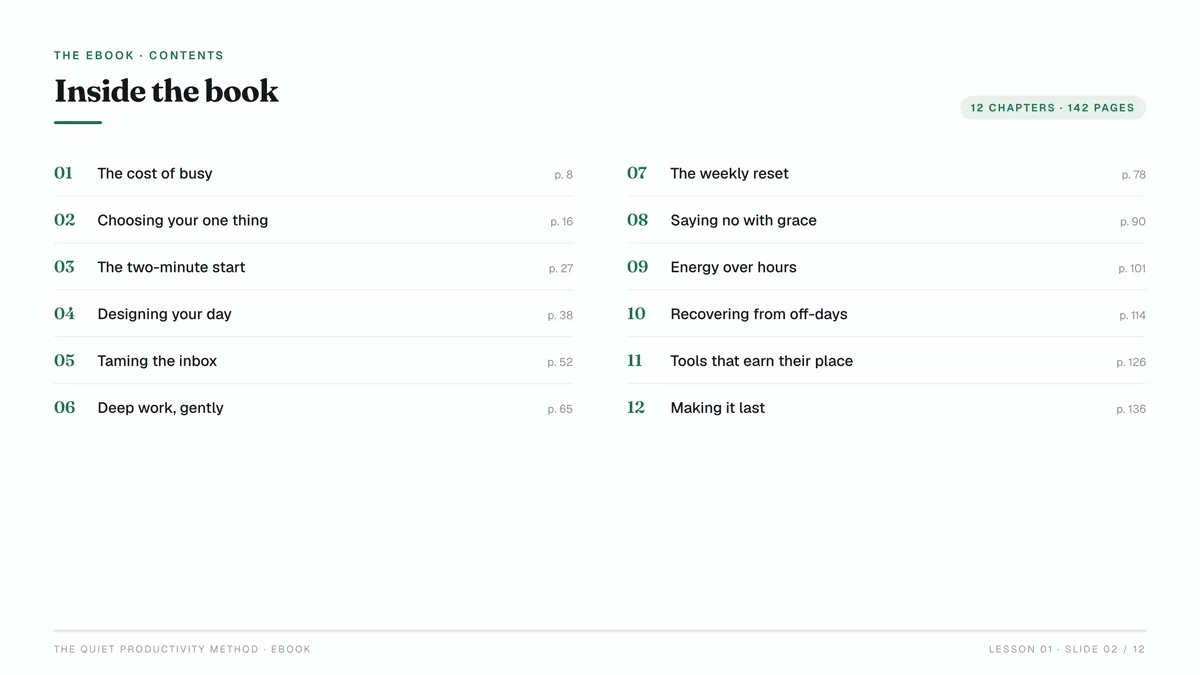
- Table of Contents (Brief): A quick overview of chapters shows the depth and breadth of content.
- Target Audience: Clearly state who will benefit most.
- Format: (e.g., "PDF, 80 pages, instant download").
For Templates & Workbooks: The Time-Saver & Efficiency Booster
Highlight convenience, ease of use, and professional results without effort.
- Headline: Focus on saved time, reduced effort, or professional appearance.
- Opening: Address the pain of starting from scratch or inconsistent branding.
- Benefits: Show tangible results (e.g., "Create stunning social media posts in 5 minutes," "Organize your entire business workflow with drag-and-drop ease").
- Compatibility: Crucial for templates (e.g., "Compatible with Canva Free/Pro," "Google Sheets compatible").
- Customization: Explain how easily they can personalize it.
- What's Included: Specific numbers (e.g., "20 Instagram Story Templates," "5 Page Notion Dashboard").
For Courses & Masterclasses: The Skill Accelerator
Emphasize skill development, career advancement, and the instructor's expertise (without inventing anecdotes).
- Headline: Focus on the specific skill learned and its impact.
- Opening: Address the desire for growth or overcoming a skill gap.
- Learning Outcomes: What specific skills or knowledge will participants gain?
- Module Breakdown: A brief overview of what each module covers.
- Instructor Credibility: Briefly state the founder's general expertise in the field (e.g., "Taught by an industry expert with 15+ years experience").
- Format: (e.g., "Video lessons, downloadable resources, community access").
- Support: Mention any Q&A sessions, community forums, or direct support.
For Digital Art & Printables: The Aesthetic & Emotional Appeal
Focus on mood, style, customization, and how it enhances their space or project.
- Headline: Highlight the aesthetic, style, or emotional benefit.
- Opening: Evoke a feeling or describe a desired atmosphere.
- Benefits: How it beautifies, inspires, or simplifies a creative project.
- Usage Ideas: Suggest how it can be used (e.g., "Perfect for nursery decor, greeting cards, or digital scrapbooking").
- File Types & Quality: Crucial for designers (e.g., "High-resolution JPG & PNG files," "Vector SVG included").
- Customization/Sizing: Any options for personalization or different sizes.
Choosing the Right Platform: Where Will Your Description Shine?
The platform you choose impacts how your description is displayed, discovered, and how much freedom you have.
| Feature | Etsy | Gumroad | Shopify (Self-Hosted) |
|---|---|---|---|
| Audience | Millions of active shoppers specifically seeking unique, handmade, or digital items. | Creators-first platform, built-in audience for digital products. | Your own audience; requires driving your own traffic. |
| Fees | Listing fee ($0.20) + 6.5% transaction fee + payment processing. etsy.com | Tiered, starting at 10% for free accounts, decreasing with sales volume. gumroad.com | Monthly subscription ($29+) + payment processing (2.9% + $0.30). |
| Description Limits | Up to 20,000 characters, supports rich text (bold, lists). | No strict character limit, supports rich text, images, embeds. | Full control over formatting, length, and media. |
| SEO Impact | Strong internal search engine, external Google SEO. | Good internal search, decent external Google SEO. | Excellent control over on-page SEO. |
| Customization | Limited store branding, standardized product pages. | Customizable product pages, simple storefronts. | Full branding, design, and product page customization. |
| Ideal For | Digital planners, printables, templates, mockups. | Ebooks, courses, software, memberships, art. | Established brands, diverse digital/physical products, full control. |
If you're starting out, platforms like Etsy or Gumroad offer a built-in audience, making it easier to get initial sales and test your descriptions. Shopify is for when you're ready to scale and build a dedicated brand.
Advanced Tactics: Beyond the Basics for 2026
Once you've mastered the fundamentals, these advanced strategies will push your conversion rates even higher.
A/B Testing Your Descriptions: Data-Driven Sales
Don't guess what works; know what works. A/B testing (or split testing) involves creating two versions of your description (A and B) and showing them to different segments of your audience to see which performs better.
- Test One Variable at a Time: Focus on headlines, opening paragraphs, specific benefits, or calls to action.
- Use Platform Tools: Some platforms (or integrated apps) offer A/B testing features. For self-hosted stores, tools like Google Optimize (though being deprecated, alternatives exist) or dedicated CRO software can help.
- Analyze Data: Look at conversion rates, time on page, and bounce rates to determine the winner. Implement the better-performing version, then test another variable.
Leveraging AI Tools (Responsibly)
AI can be a powerful co-pilot, not a replacement, for your creativity.
- Brainstorming & Idea Generation: Use AI to generate headline ideas, benefit statements, or outlines based on your product and target audience.
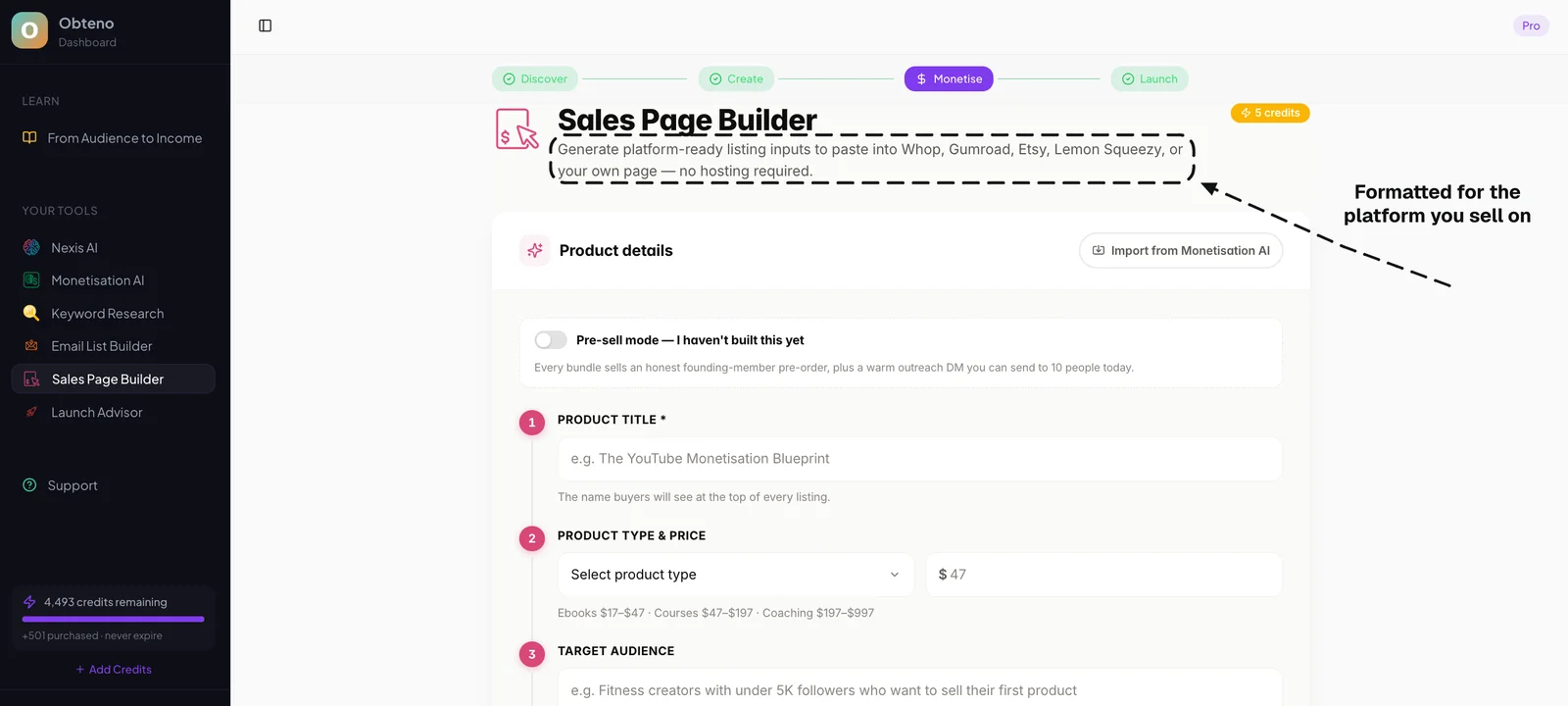
- Drafting Support: Get a first draft quickly, then infuse it with your unique voice and detailed insights. Obteno writes the description and the rest of the listing fields, shaped for the platform you are selling on. This helps overcome writer's block and ensures key elements are covered.
- Keyword Research: AI tools can help identify relevant keywords and analyze competitor descriptions for inspiration.
- Grammar & Clarity: Use AI-powered writing assistants to refine your language, check for grammar errors, and improve readability.
Video & Image Integration
Your written description is paramount, but visuals amplify its impact.
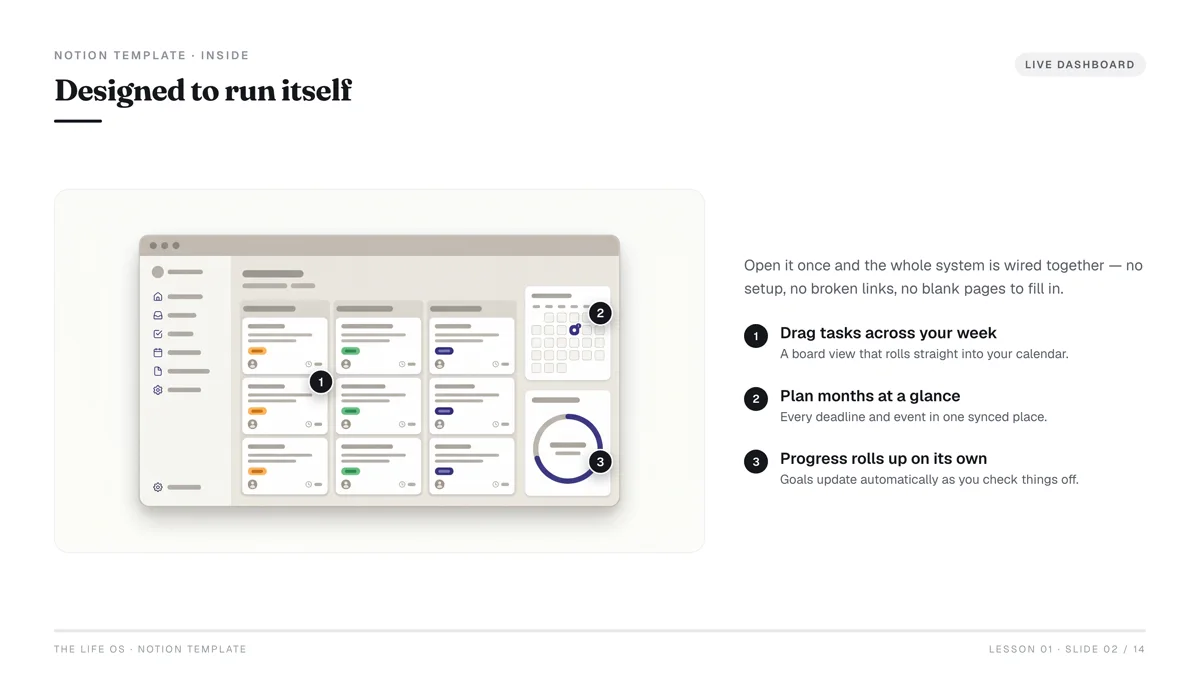
- Product Demo Videos: A short video showing your digital product in action (e.g., navigating a Notion template, flipping through an ebook, using a preset) can answer questions and build desire more effectively than text alone.
- High-Quality Mockups: Use realistic mockups (e.g., ebook on a tablet, planner printed on paper) to make your intangible product feel more real and desirable.
- Infographics: Visually represent key benefits, features, or the "before & after" transformation.
Personalization & Segmentation (Future-Proofing)
As data analysis becomes more sophisticated, tailoring your descriptions to specific buyer segments will become increasingly important.
- Dynamic Content: For self-hosted platforms, you might eventually show different parts of a description based on a user's previous behavior or demographic data.
- Targeted Landing Pages: Create unique landing pages with slightly tweaked descriptions for different ad campaigns or audience segments. For instance, a course description might emphasize career growth for one segment and passion project development for another.
Frequently Asked Questions
How long should a digital product description be?
There's no one-size-fits-all answer, but aim for comprehensive yet concise. For complex products like courses, 500-1000 words is often appropriate. For simpler items like printables, 200-400 words might suffice. The goal is to provide enough information to overcome objections without overwhelming the reader.
What's the most important part of a product description?
The most important part is the opening hook (headline + first paragraph) and the core transformation message. If you don't grab attention and clearly articulate the primary benefit upfront, readers won't stick around to learn about the features or call to action.
Can I use emojis in my product descriptions?
Yes, judiciously! Emojis can add personality, break up text, and visually highlight key points, making your description more engaging and readable. However, avoid overuse, as it can appear unprofessional or distracting. Use them to enhance, not replace, your written message.
How do I find keywords for my digital product?
Start by thinking like your customer: what would they type into a search engine? Use tools like Google Trends, Etsy's search bar suggestions, or even Amazon's search autocomplete. Look for long-tail keywords (phrases of 3+ words) that are specific to your niche and product.
Should I include pricing in the description or just rely on the price field?
Generally, rely on the dedicated price field provided by your selling platform. Including pricing directly in the description can complicate updates if you change your price. The description's role is to build value and justify the price, making the buyer feel the investment is worthwhile.
What's the biggest mistake beginners make with descriptions?
The single biggest mistake beginners make is focusing solely on what their product is (features) rather than what it does for the customer (benefits and transformation). They often write from their own perspective as the creator, rather than from the customer's perspective of seeking a solution.