
The digital product market is a gold rush, projected to reach an astounding $500 billion by 2027. Yet, for many experts, educators, and creators, the leap from "I know something valuable" to "I'm selling a digital product" feels like navigating a dense jungle without a map. The internet is flooded with surface-level advice, leaving you with more questions than answers about how to genuinely transform your unique knowledge into a sought-after digital asset.
This isn't another generic guide. This is the definitive playbook, designed to cut through the noise and provide a clear, actionable path for anyone looking to turn their expertise into a sustainable digital product business in 2026. We'll dive deep into validation, creation, pricing, and launch strategies, arming you with the insights you need to bypass common pitfalls and build something truly valuable.
Why Now Is the Time for Digital Products
The shift towards online learning, remote work, and instant access to information has created an unprecedented demand for digital products. People are actively seeking solutions, skills, and entertainment that can be delivered instantly, globally, and often at a lower cost than traditional alternatives.
This isn't just about passive income, though that's a powerful draw. It's about:
- Leverage: Create once, sell infinitely. Unlike services or physical products, digital goods have near-zero marginal cost per sale.
- Reach: Your knowledge isn't limited by geography. You can sell to anyone, anywhere in the world, with an internet connection.
- Impact: Share your unique insights and help thousands (or millions) solve problems, learn new skills, or simply enjoy something you've created.
- Flexibility: Build a business that fits your lifestyle. Work from anywhere, set your own hours, and scale without needing to hire staff or manage inventory.
The barriers to entry are lower than ever, with powerful, user-friendly tools making creation and distribution accessible to everyone. The question isn't if you should turn your knowledge into a digital product, but how.
What Digital Product Should You Create?
This is often the first major hurdle. Your knowledge is vast, but what's the best format to package it? The "best" product type depends on your expertise, your target audience, and your comfort with different creation tools.
For total beginners
If you're just starting, focus on products that are relatively quick to create and don't require advanced technical skills.
- Ebooks & Guides: Share your expertise in a written format. This could be a "How-To" guide, a collection of tips, a short course outline, or even a personal story with actionable lessons.
- Pros: Low barrier to entry, can be created with tools like Google Docs, Notion, or Canva.
- Cons: Requires good writing skills; market can be saturated.
- Example: "The Beginner's Guide to Starting an Indoor Herb Garden."
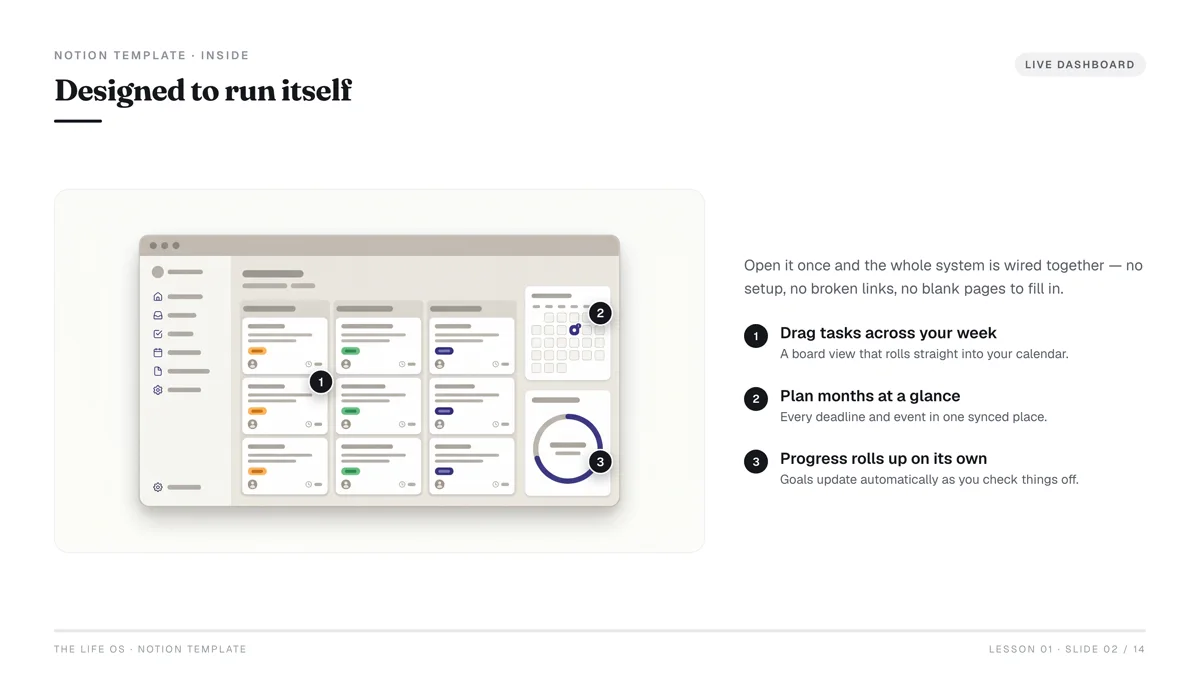
- Templates (Notion, Canva, Excel, etc.): If you've created a system or a design that helps you or others, turn it into a reusable template.
- Pros: High perceived value, relatively quick to create once the system is built, visual appeal.
- Cons: Requires design or organizational skill; niche-specific.
- Example: "Notion Template: Ultimate Freelancer Project Tracker."
- Checklists & Worksheets: Simple, actionable tools that help people apply your knowledge.
- Pros: Very quick to create, high utility for users, can be lead magnets.
- Cons: Lower price point, might need to be bundled.
- Example: "Pre-Launch Checklist for New Online Businesses."
For experienced professionals
If you have deeper expertise and are willing to invest more time, you can create higher-value products.
- Online Courses: Package your knowledge into structured video lessons, modules, and exercises. This is ideal for teaching complex skills or transforming someone from beginner to advanced.
- Pros: High perceived value, premium pricing potential, strong community-building opportunities.
- Cons: Significant time investment, requires video production/editing skills, need a learning platform.
- Example: "Mastering Advanced Python for Data Science."
- Membership Sites: Offer ongoing access to exclusive content, a community, live Q&As, or new resources on a recurring subscription basis.
- Pros: Recurring revenue, strong community, high customer lifetime value.
- Cons: Requires continuous content creation and community management, high commitment.
- Example: "The SEO Growth Hub: Monthly Strategy & Tools."
- Software & Tools: If you have coding skills, develop a small utility, plugin, or web application that solves a specific problem.
- Pros: High value, can command premium pricing, potentially scalable.
- Cons: High technical barrier, significant development time, ongoing maintenance.
- Example: "A Chrome Extension for Keyword Research."
Here's a quick comparison of popular digital product types:
| Product Type | Creation Effort | Price Point | Passive Income Potential | Ideal For... |
|---|---|---|---|---|
| Ebook/Guide | Low-Medium | Low-Medium | High | Sharing written expertise, quick solutions |
| Template | Low-Medium | Low-Medium | High | Streamlining processes, design assets |
| Online Course | Medium-High | Medium-High | Medium | In-depth teaching, skill transformation |
| Membership Site | High (ongoing) | High (recurring) | High | Community, continuous learning, exclusive access |
| Digital Art/Assets | Low-Medium | Low | High | Designers, artists, content creators |
Start small. Your first digital product doesn't need to be a magnum opus. An ebook or a template can be launched in weeks, providing invaluable learning experiences and initial revenue that can fund larger projects.
How Do You Validate Your Digital Product Idea?
The biggest mistake beginners make is spending weeks or months creating a product nobody wants. Validation is the process of proving demand before you build.
Market Research: Who needs what you know?
Start by identifying a problem your knowledge can solve. What questions do people frequently ask you? What struggles do you see in your niche?
- Keyword Research: Use tools like Google Keyword Planner (free with a Google Ads account), Ahrefs, or Semrush to see what terms people are searching for related to your expertise. High search volume for a problem often indicates demand for a solution.
- Example: If you're a productivity expert, search for "time management tips," "how to stop procrastinating," "daily planner."
- Forum & Community Analysis: Explore Reddit, Facebook Groups, Quora, and niche-specific forums. Look for recurring questions, pain points, and topics generating a lot of engagement. This reveals what people are actively struggling with and what solutions they're seeking.
- Example: In a "digital nomad" Facebook group, note how often people ask about "visa strategies for remote workers" or "best tools for managing client projects across time zones."
- Google Trends: See if interest in your topic is growing or declining over time trends.google.com. A rising trend suggests increasing demand.
- Example: Search for "AI art prompts" – you'd likely see a significant upward trend in recent years.
Competitor Analysis: What's already out there?
Don't be afraid of competition; it validates the market. Analyze successful digital products in your niche.
- Identify Top Sellers: Look at marketplaces like Etsy (for templates, digital art), Gumroad (for ebooks, courses, software), and even Amazon (for Kindle ebooks). What types of products are selling well? What features do they offer?
- Analyze Sales Pages & Reviews: What promises are competitors making? What problems do they solve? Read the reviews – both positive and negative. Negative reviews often highlight unmet needs or areas where you can differentiate your product.
- Find Your Unique Angle: How can you make your product different or better? Can you offer a unique perspective, a specific niche focus, a better user experience, or a more comprehensive solution?
- Example: Instead of "Beginner's Yoga Guide," offer "Yoga for Desk Workers: 10-Minute Routines to Relieve Back Pain."
Feedback Loops: Ask your audience
The most direct way to validate is to ask potential customers.
- Surveys: Use free tools like Google Forms or SurveyMonkey to ask your audience (or a relevant community) about their challenges, what solutions they've tried, and what they'd be willing to pay for.
- Interviews: Conduct one-on-one calls with a few ideal customers. Ask open-ended questions about their problems and desires. Listen more than you talk.
- Pre-Sales/Waitlists: The ultimate validation is if someone is willing to pay you before the product is finished. Offer a discounted pre-sale or create a waitlist page where people can sign up to be notified (and show interest) when your product launches.
Building Your Digital Product: Tools & Techniques
Once validated, it's time to build. The tools you use will depend on your chosen product type.
Ebooks, Guides, & Reports
- Content Creation:
- Writing: Google Docs, Notion, Microsoft Word.
- Structure: Outline your content before writing. Break it into logical chapters and sections.
- Editing: Use Grammarly or hire a professional editor for polish.
- Design & Formatting:
- Canva: Excellent for creating visually appealing layouts, covers, and graphics, even with no design experience. canva.com offers thousands of templates.
- Adobe InDesign/Affinity Publisher: For more advanced, professional layouts.
- PDF Export: Export your final document as a high-quality PDF, ensuring all links are clickable.
Online Courses & Workshops
- Content Creation:
- Scripting: Write detailed scripts for your video lessons.
- Video Recording: Use a good quality webcam or DSLR camera. Loom is great for screen recordings. OBS Studio is free for more advanced setups.
- Audio Quality: A good microphone (e.g., Blue Yeti, Rode NT-USB Mini) is more important than a fancy camera for engagement.
- Editing: DaVinci Resolve (free), Adobe Premiere Pro, Final Cut Pro. Keep videos concise and engaging.
- Platform Selection:
- Dedicated Course Platforms: Teachable, Thinkific, Kajabi (all-in-one). These handle video hosting, payments, student management, and drip content.
- Membership Platforms: Patreon (for ongoing content), Circle (for community-focused courses).
- Self-Hosted (Advanced): WordPress with plugins like LearnDash or Sensei.
Templates & Digital Assets
- Design Tools:
- Canva: For social media templates, planners, worksheets, presentations.
- Notion: For productivity systems, content calendars, project trackers. notion.com provides excellent flexibility.
- Adobe Creative Suite (Photoshop, Illustrator): For professional graphic design, digital art, mockups.
- Figma/Sketch: For UI/UX design templates.
- Microsoft Excel/Google Sheets: For budget planners, trackers, data analysis templates.
- Delivery: Provide clear instructions on how to use the template, often as a PDF alongside the template file itself. For Notion, provide a shareable link.
Software & Tools
- Development: Python, JavaScript, Ruby on Rails, etc. (depending on the tool).
- Deployment: Heroku, Vercel, AWS, Google Cloud.
- Integration: APIs for Stripe stripe.com (payments), Mailchimp (email marketing), etc.
- No-Code Tools: Bubble, Webflow, Glide can help create functional apps without writing code, dramatically lowering the barrier to entry for non-developers.
Don't strive for perfection in your first version. Aim for "minimum viable product" (MVP). Get it out there, gather feedback, and iterate. Version 1.0 is always better than Version 0.0.
Pricing Your Digital Product for Profit
Pricing is more art than science, but it's critical for profitability. Too low, and you undervalue your expertise; too high, and you scare off potential buyers.
Value-Based Pricing
This is the most effective strategy. Instead of focusing on your costs (which are minimal for digital products), focus on the value your product provides to the customer.
- Quantify the Benefit: How much time, money, or effort does your product save them? What is the outcome worth? If your ebook helps someone save $1,000 on taxes, a price of $27-$47 is easily justifiable.
- Problem Solved: The bigger the problem your product solves, the higher the price you can command. A solution to a minor inconvenience will be priced lower than a solution to a significant life or business challenge.
Competitor-Based Pricing
Research what similar products are selling for. This gives you a baseline and helps you position your product.
- Anchor Pricing: If competitors sell a similar course for $497, you might price yours at $397 to appear more affordable, or at $597 with added bonuses to appear premium.
- Avoid Undercutting: Don't just price lower. If your product is truly better or offers a unique angle, justify a higher price. Constant undercutting devalues your entire niche.
Tiered Pricing Strategies
Offer different versions of your product at various price points to appeal to a wider audience and increase average order value.
- Basic Tier: The core product (e.g., ebook).
- Standard Tier: Core product + bonuses (e.g., ebook + templates + checklist).
- Premium Tier: Standard tier + personalized support/community access (e.g., ebook + templates + checklist + private community access + monthly Q&A call).
Example Math:
Let's say you create an ebook on "Productivity for Creatives."
- Basic: Ebook PDF - $29
- Standard: Ebook PDF + 3 Notion templates + editable workflow checklist - $49
- Premium: Ebook PDF + 3 Notion templates + editable workflow checklist + 1-hour group coaching call + private Slack community access - $99
This strategy not only increases your potential revenue per customer but also allows customers to choose the option that best fits their budget and needs.
Choosing Your Sales Platform: Where to Sell?
Your sales platform is where customers discover, purchase, and access your digital product. The right choice depends on your product type, technical comfort, and desired level of control.
| Platform | Best For... | Transaction Fees/Costs | Pros | Cons |
|---|---|---|---|---|
| Gumroad | Ebooks, templates, courses, digital art, software | 10% + processing fees (declining with sales volume) gumroad.com/pricing | Easy setup, built-in audience features, simple UI | Higher transaction fees for new sellers, less customization |
| Etsy | Digital art, printables, templates, planners | $0.20 listing fee + 6.5% transaction fee + payment processing [etsy.com/seller-handbook/article/everything-you-need-to-know-about/568818944517] | Huge existing marketplace, good for visual products | Niche-specific, less control over branding, competitive |
| Shopify | Any digital product (with apps), physical products | Basic Plan: $39/month + 2.9% + $0.30 per transaction shopify.com/pricing | Full control, scalable, robust e-commerce features | Monthly fee, requires more setup, need apps for digital delivery |
| Teachable/Thinkific | Online courses, memberships | Free plan (higher fees) or monthly subscription + lower fees | Dedicated course features, student management, video hosting | Primarily for courses, can be expensive for advanced features |
| Your Own Website | Any product (with e-commerce plugin) | Hosting costs + plugin costs (e.g., WooCommerce) | Maximum control, no transaction fees (beyond payment processor) | Requires technical setup, responsible for all marketing |
- Gumroad: A fantastic starting point for beginners. It handles almost everything: product hosting, payments, basic landing pages, and even email marketing. You can literally upload a PDF and start selling in minutes. Obteno's founder built a $23,718 digital-product business in 60 days using a similar low-friction approach.
- Etsy: Ideal if your product is highly visual and fits a craft or creative niche. Think digital planners, wedding invitations, or unique graphics. Leverage Etsy's massive audience.
- Shopify: If you plan to build a robust brand, sell multiple products (digital and physical), and want full control over your storefront and marketing, Shopify is excellent. You'll need apps from their marketplace to handle digital product delivery.
- Dedicated Course Platforms (Teachable, Thinkific): If your primary product is an online course, these platforms are tailored for it. They offer features like student progress tracking, quizzes, and certificates.
- Your Own Website (e.g., WordPress with WooCommerce): For maximum control and branding, you can set up your own e-commerce store. This requires more technical know-how but gives you complete ownership and avoids platform-specific transaction fees (beyond your payment processor like Stripe).
If you're unsure, start with Gumroad. It's low-risk, easy to use, and allows you to test your product without significant upfront investment. You can always migrate to a more robust platform later if your business scales.
Launching & Marketing Your Digital Product
Creating a great product is only half the battle. You need a solid launch and marketing strategy to get it into the hands of your ideal customers.
Pre-Launch Hype
Build anticipation before your product is even available.
- Build an Email List: Start collecting emails weeks or months before launch. Offer a free lead magnet (a mini-guide, checklist, or template) related to your product. Your email list is your most valuable asset.
- Tease on Social Media: Share snippets, behind-the-scenes glimpses, and progress updates. Ask questions to engage your audience and gather feedback.
- Create a Waitlist Page: Set up a simple landing page explaining what's coming and allow people to sign up for early bird access or discounts.
- Content Marketing: Publish blog posts, videos, or podcasts that relate to the problem your product solves. Position yourself as an expert.
Launch Day Strategy
Make a splash when your product goes live.
- Email Announcement: Send a dedicated email to your list announcing the launch, highlighting key benefits, and providing a direct link to purchase. Offer an exclusive launch discount.
- Social Media Blitz: Post across all your relevant platforms. Use compelling visuals and clear calls to action.
- Guest Posts/Podcast Appearances: If possible, arrange to be featured on other platforms in your niche to reach new audiences.
- Affiliate Program: Consider setting up an affiliate program (many platforms like Gumroad and Teachable offer this) where others can earn a commission for promoting your product. This scales your reach.
Post-Launch Promotion & Iteration
A launch is not a one-time event. Keep promoting and improving.
- Ongoing Content Marketing: Continue to create valuable content that naturally leads people to your product.
- Paid Advertising: Consider running targeted ads on platforms like Facebook, Instagram, or Google to reach a wider audience, especially if your product has a proven conversion rate.
- Collect Testimonials: Ask happy customers for reviews and testimonials. Social proof is incredibly powerful.
- Analyze & Improve: Track your sales data. What's working? What's not? Gather feedback from customers and use it to update and improve your product (e.g., "Version 2.0 with new features!"). This continuous improvement fosters loyalty and generates more sales.
Automating & Scaling Your Digital Product Business
The beauty of digital products is their scalability. Once created, they can generate income largely on autopilot.
- Automate Delivery: Ensure your chosen platform automatically delivers the product immediately upon purchase.
- Email Sequences: Set up automated email sequences for new customers (welcome, thank you, tips for using the product, request for review) and for potential customers who abandon their cart.
- Customer Support: Use FAQs and clear instructions within your product to minimize support requests. For common issues, use templated responses.
- Upsells & Cross-sells: Once a customer buys one product, offer them related products or a higher-tier version. This increases your average customer value.
- Outsource Marketing: As your business grows, consider hiring freelancers for specific tasks like ad management, content creation, or social media management to free up your time.
By focusing on automation and strategic growth, you can transform your knowledge into a truly impactful and scalable digital product business that serves you for years to come.
Frequently Asked Questions
How long does it take to create a digital product?
The time varies wildly based on product type. A simple ebook or template might take 2-4 weeks, while a comprehensive online course could take 2-6 months or longer to produce high-quality content. Starting with a Minimum Viable Product (MVP) can significantly reduce initial creation time.
Do I need a large audience to sell digital products?
No. While an existing audience helps, it's not a prerequisite. Many successful digital product creators start by focusing on niche communities, running targeted ads, or leveraging marketplaces like Etsy or Gumroad that have built-in audiences. Validation and a great product are more important than a massive following.
What are the common mistakes when selling digital products?
The most common mistakes include creating a product without validating demand, underpricing your value, neglecting marketing efforts after launch, and failing to collect and act on customer feedback. Also, ignoring platform fees can significantly eat into profits.
Can I sell digital products for free?
You can offer digital products for free as lead magnets to build an email list, which can then be used to market paid products. However, selling them for free as your primary business model is not sustainable. Focus on providing immense value at a fair price.
How much money can I make from digital products?
Earnings vary immensely. Some creators earn a few hundred dollars a month, while others generate six or even seven figures annually. Your income depends on your product's value, pricing, marketing effectiveness, and sales volume. A single $27 ebook sold to 100 people makes $2,700, while a $497 course sold to 50 people makes $24,850.